Have you noticed how kitchens in 2026 look calmer, cleaner, and somehow more spacious—even when they aren’t? That’s the power of hidden pantry ideas, and especially kitchen ideas hidden pantry solutions that quietly transform how we store, organize, and live. In this article, I’ll walk through the smartest hidden pantry ideas layout trends shaping modern homes, from discreet cabinetry to walk-in solutions that feel almost invisible.
I’ll explain what actually works in real kitchens, how designers are hiding storage in plain sight, and which ideas make sense for small spaces, small kitchen layouts, and even unexpected areas like stairs or basement steps. If you’re planning a renovation—or just dreaming ahead—these ideas will help you see your kitchen differently.
Hidden Pantry Ideas 2026 For Modern Kitchens
When I look at kitchen design trends for 2026, hidden pantries stand out as a response to how we actually use our homes today. Open layouts demand visual calm, and hidden pantry ideas allow storage to exist without breaking the flow of the kitchen. These designs prioritize clean lines, continuity of materials, and integrated storage that blends seamlessly into the overall interior.
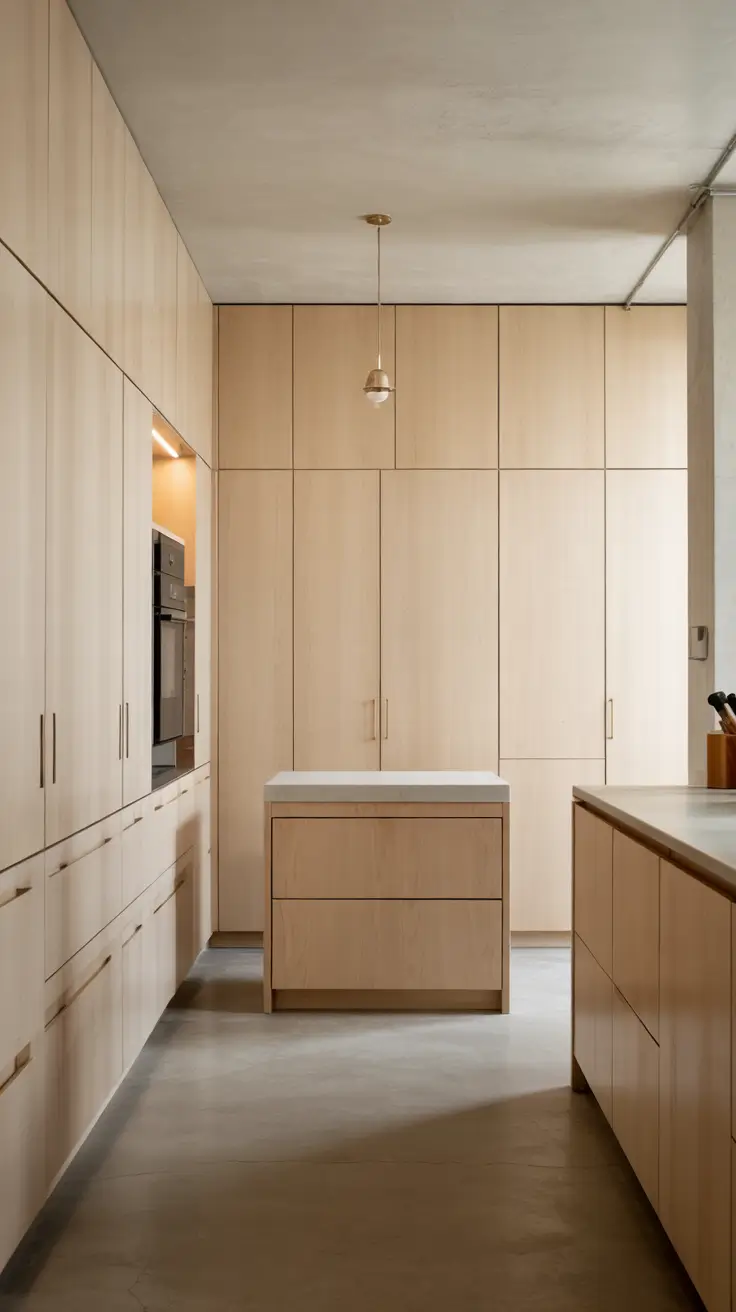
In practice, this often means full-height cabinetry, flush panels, and concealed entrances that look identical to surrounding surfaces. Modern kitchen cabinets are doing most of the work here—designed with touch-latch systems, pocket doors, or integrated handles so the pantry remains visually silent until needed. I always recommend matching finishes exactly to keep the illusion intact.
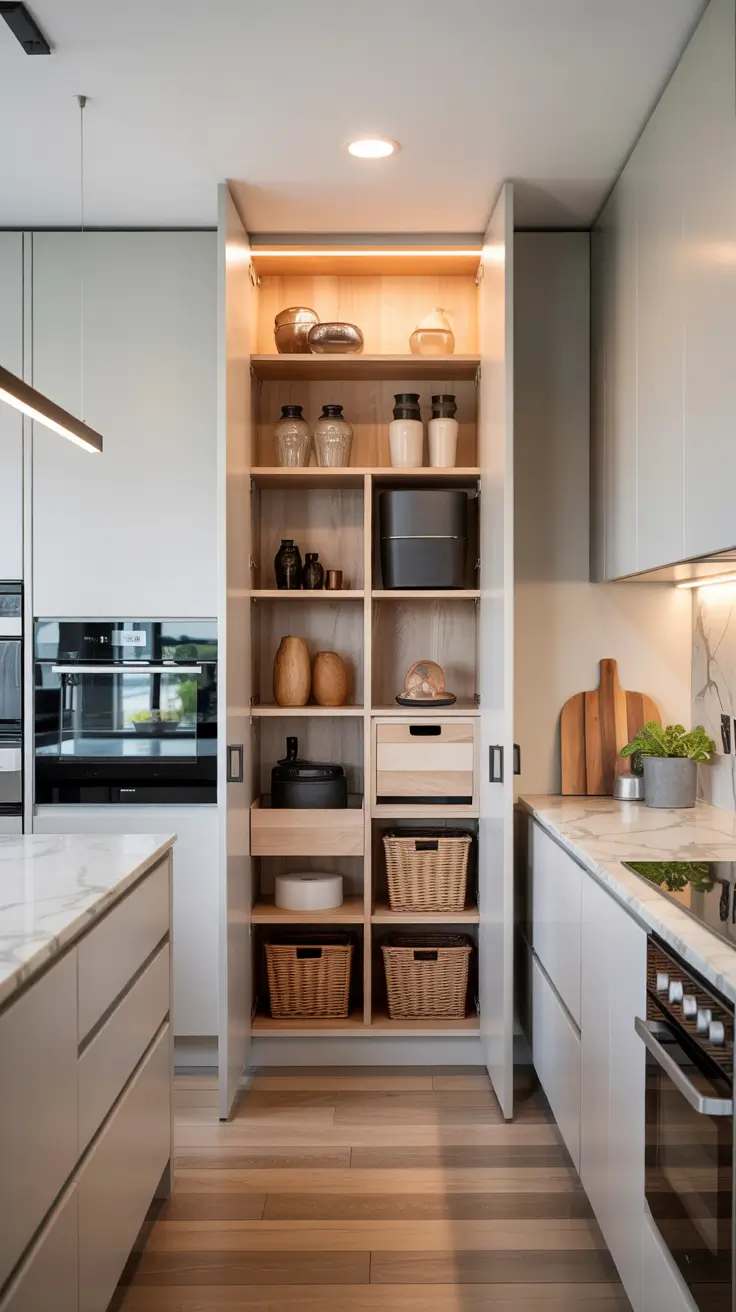
From my experience, homeowners are happiest when the pantry feels like an extension of the kitchen rather than a separate room. Designers frequently stress that hidden storage works best when it supports daily habits, not just aesthetics.
What’s often missing here is early planning for outlets and ventilation inside the pantry. I always suggest accounting for appliances, lighting layers, and airflow from the start.
Why Hidden Pantry Ideas Are Trending In 2026
The popularity of hidden pantries reflects a broader shift toward intentional living. In 2026, homeowners want kitchens that feel composed, not cluttered, and hidden pantry ideas small spaces solutions are especially appealing. I see this trend as a response to years of overexposed open shelving.
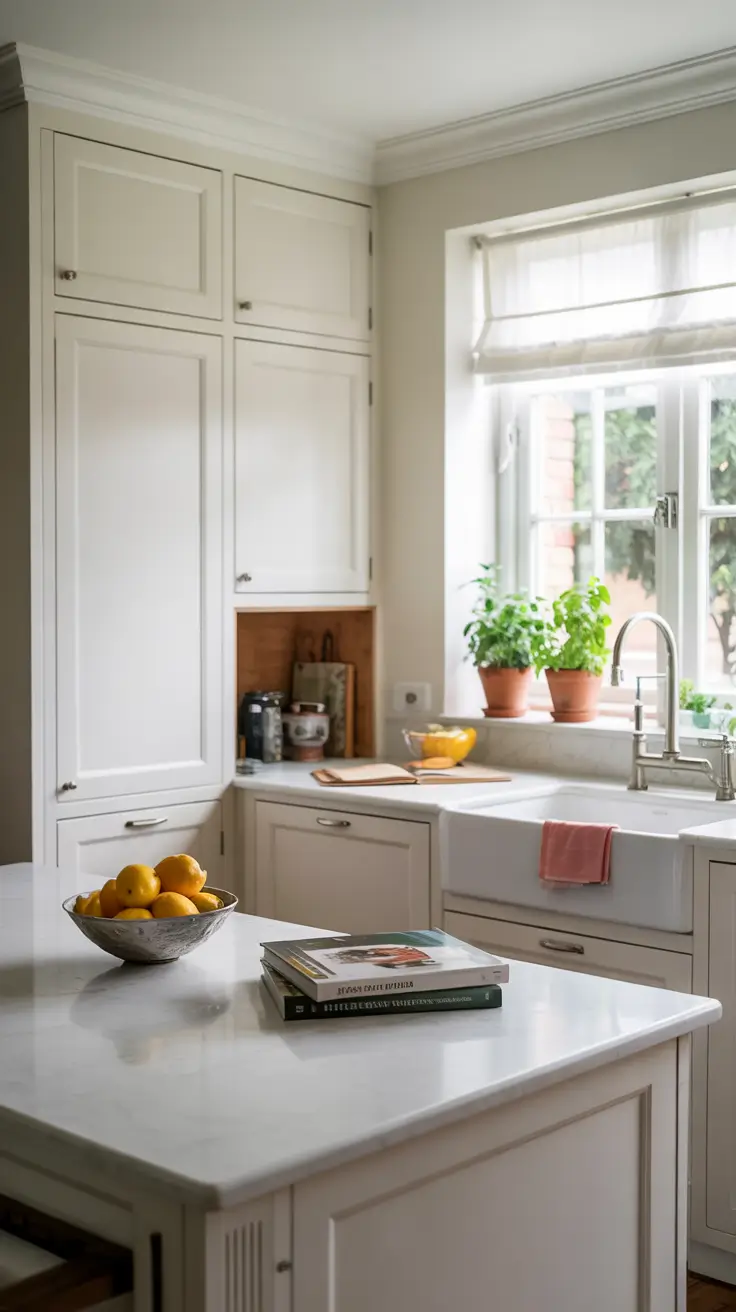
What’s driving this movement is smarter layout planning. Pantries are now integrated zones designed to reduce countertop clutter while improving workflow, whether that’s a concealed wall pantry or a discreet walk in solution.
Personally, I’ve noticed that kitchens with hidden storage feel calmer to live in. Many U.S. design publications point out how visual simplicity improves everyday comfort, and hidden pantries support that idea perfectly.
What’s often overlooked is resale value. Thoughtful hidden pantry design adds flexibility and long-term appeal to modern homes.
Kitchen Ideas Hidden Pantry With Seamless Design
Seamless integration is the core of successful kitchen ideas hidden pantry concepts. I always focus on alignment—panel joints, door gaps, and material continuity—so the pantry feels architectural rather than decorative.
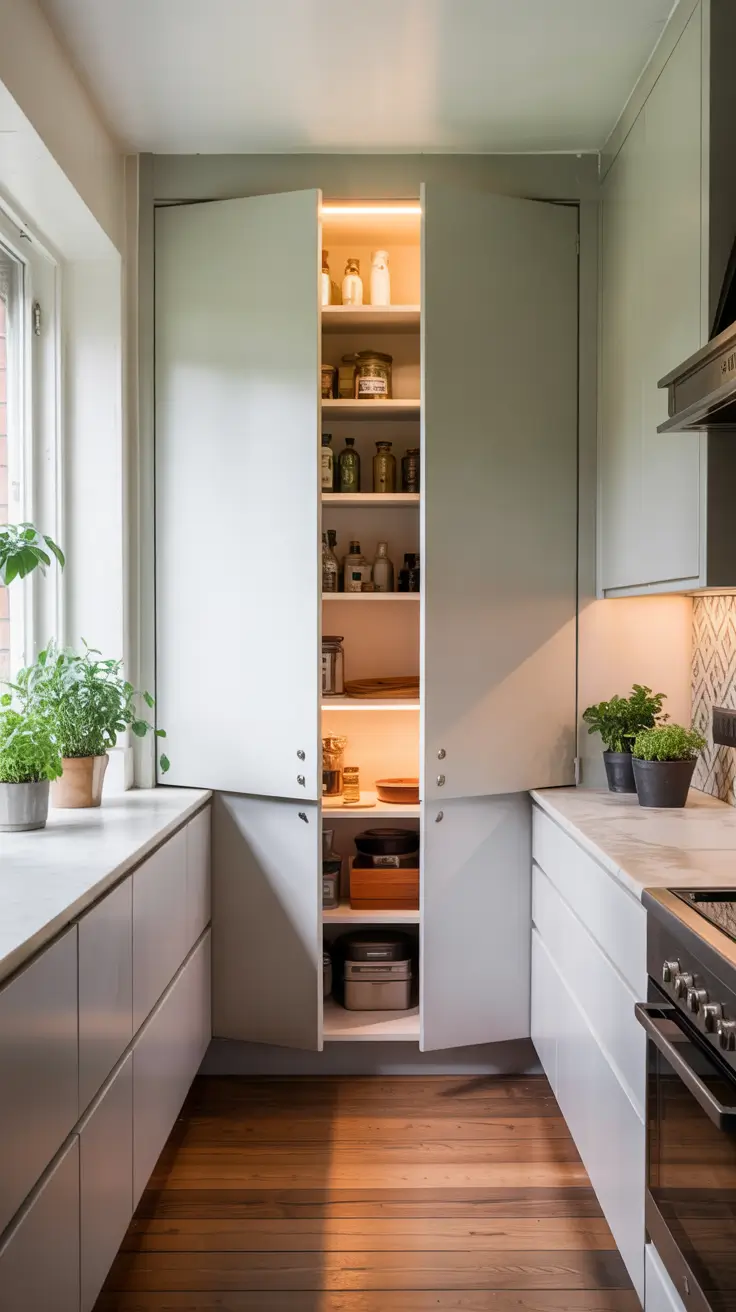
Integrated panels, custom millwork, and soft-close hardware ensure that pantry doors blend into cabinet walls. When done correctly, the pantry disappears completely when closed, maintaining a clean kitchen backdrop.
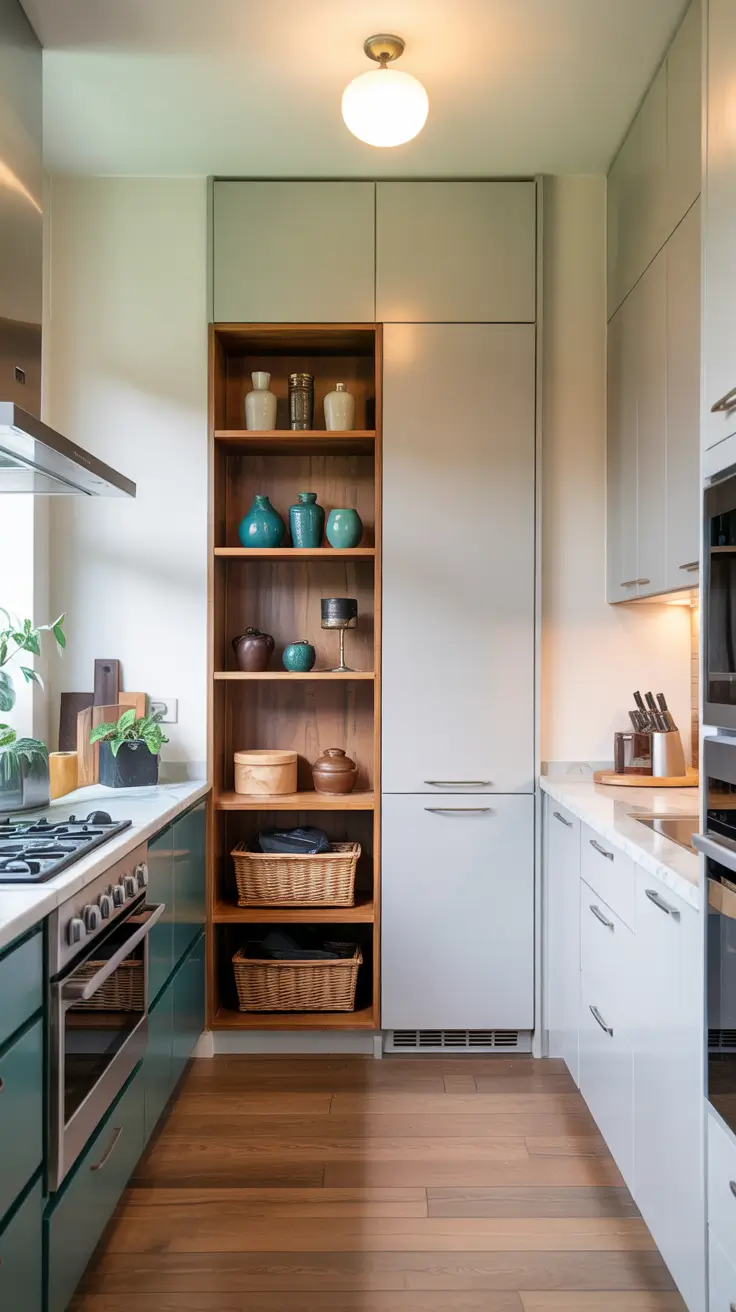
In my experience, the most successful designs are the ones guests don’t notice at first glance. Many modern designers emphasize restraint, and I fully agree—subtlety is the goal.
What’s often missing is attention to the pantry interior finish. I recommend continuing the kitchen’s palette inside to preserve the seamless effect when the door is open.
Modern Kitchen Cabinets With Hidden Pantry Ideas
Modern kitchen cabinets with hidden pantry ideas allow storage to become part of the kitchen’s visual structure. Instead of visible pantry doors, cabinetry absorbs that function naturally, especially in linear or galley layouts.
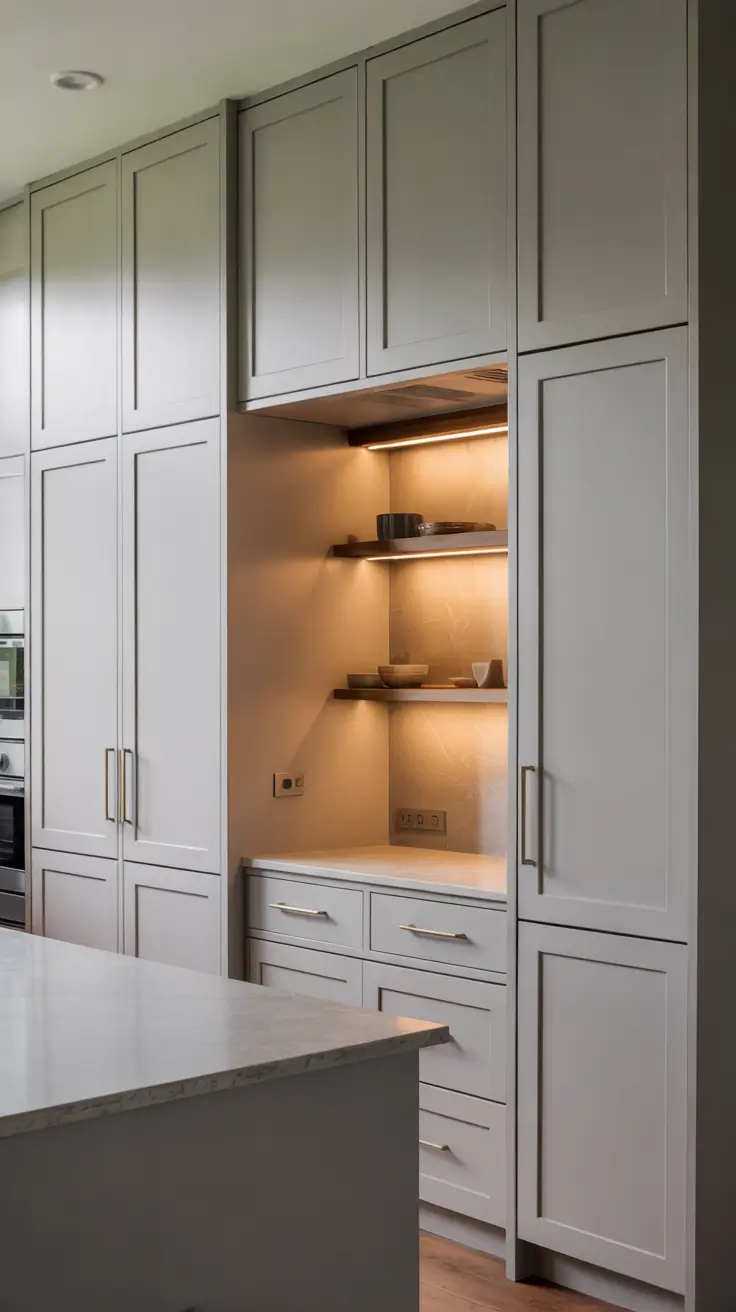
Tall cabinets with internal shelving systems, pull-outs, and adjustable organizers make these pantries highly functional. Quality hardware is essential here, as these doors are used daily.
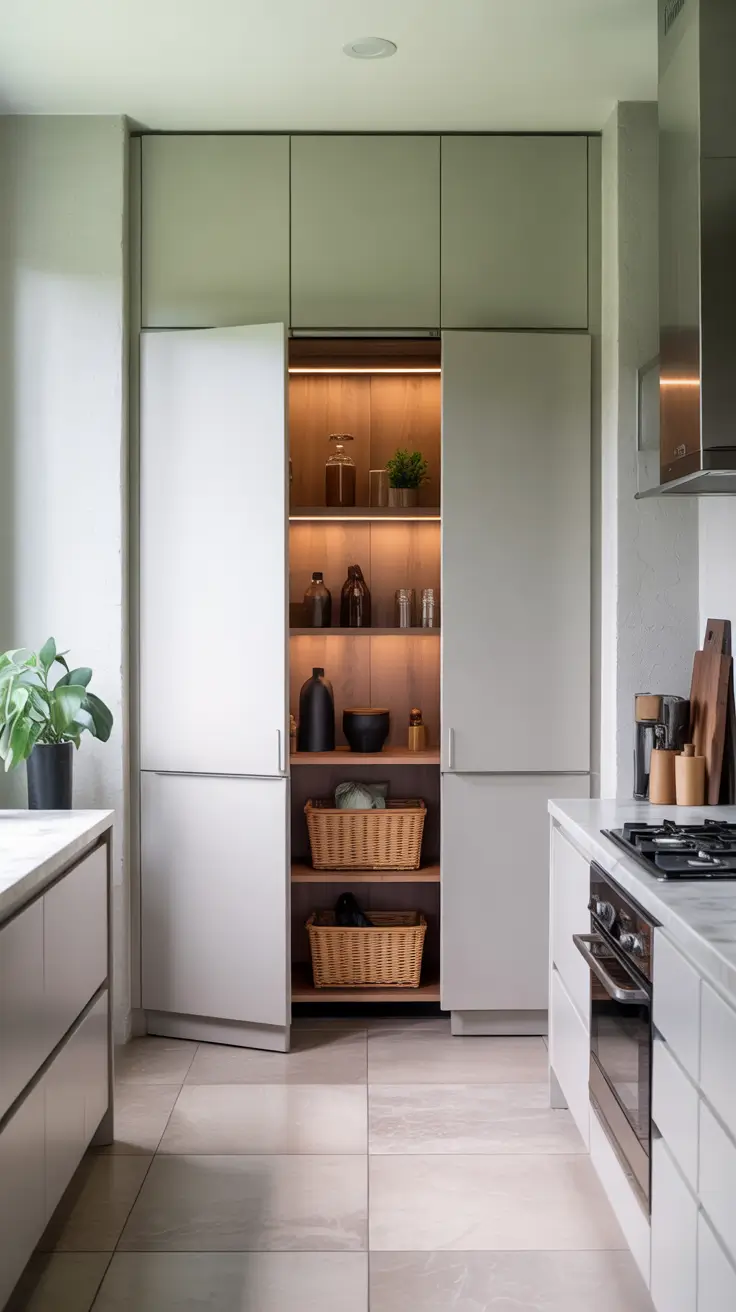
From my perspective, cabinetry is where smart design pays off long-term. Interior design experts consistently note that well-planned cabinets define the success of a kitchen.
What I often add is appliance zoning inside the pantry cabinet to prevent clutter and maintain organization.
Hidden Pantry Ideas Walk In That Feel Invisible
A hidden pantry ideas walk in design offers generous storage without visual disruption. These walk-ins are concealed behind matching panels or minimalist doors that blend into surrounding cabinetry.
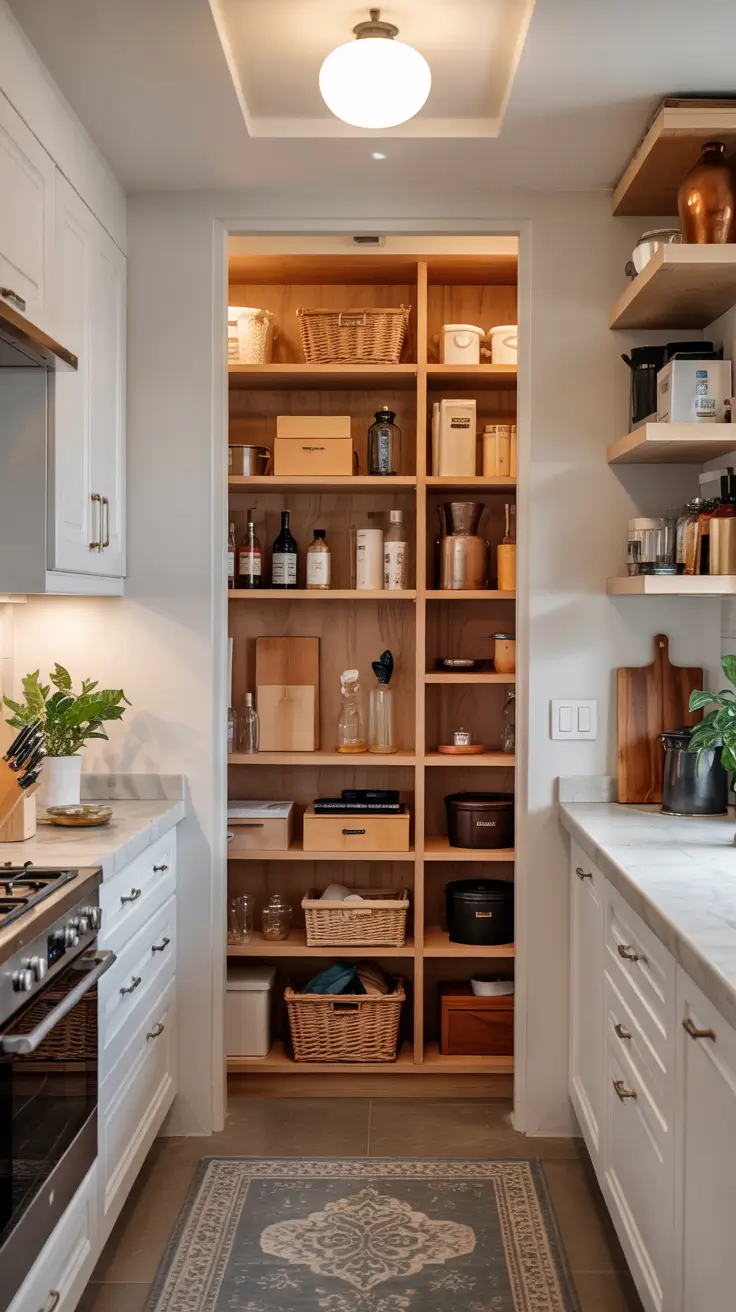
Inside, clear circulation, open shelving, and layered lighting make the space easy to use. Even though the pantry is hidden, it should feel comfortable and intentional.
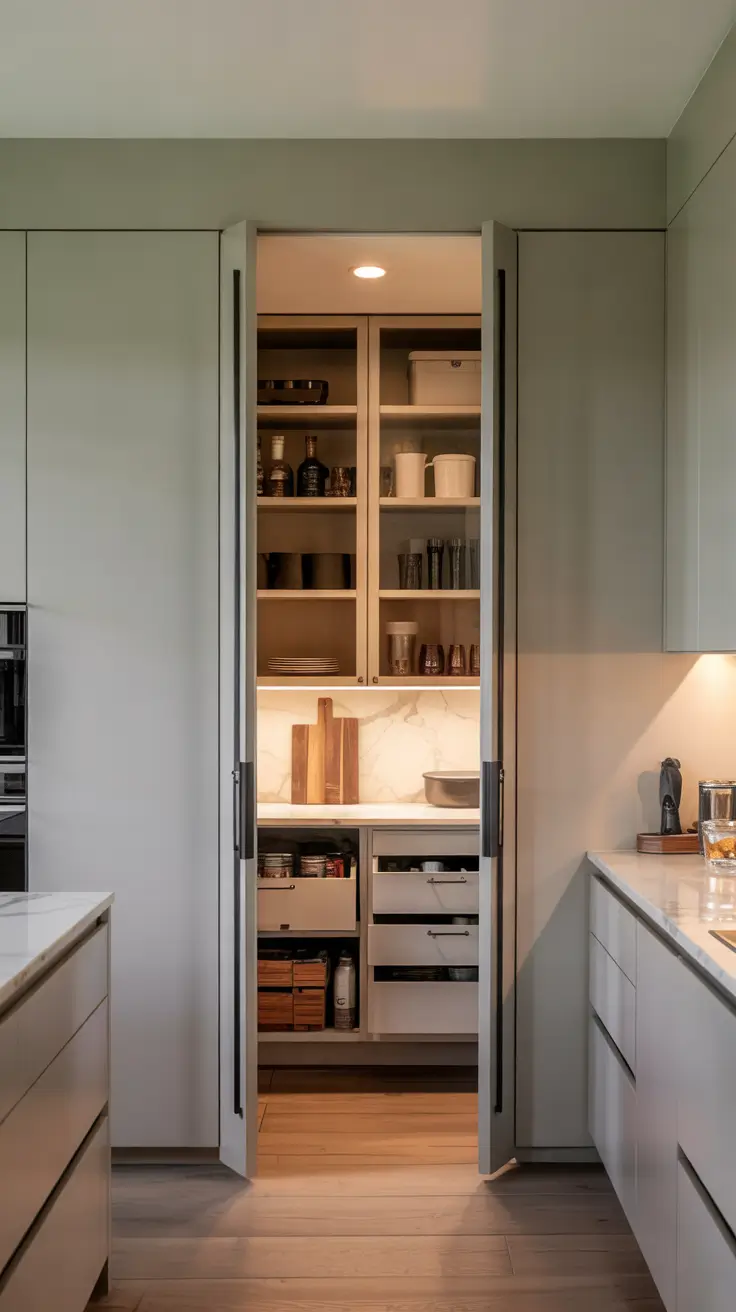
From my experience, walk-in pantries work best when placed along natural kitchen pathways. Designers often stress ergonomics here, and I’ve seen how much that matters in daily use.
What’s sometimes missing is sound control. Soft-close hardware and quiet door systems help keep the pantry truly unobtrusive.
Small Walk-In Pantry With Hidden Storage Solutions
A small walk-in pantry can still feel refined when designed with hidden principles. In compact homes, these pantries are often tucked behind slim doors or cabinet walls to preserve openness.
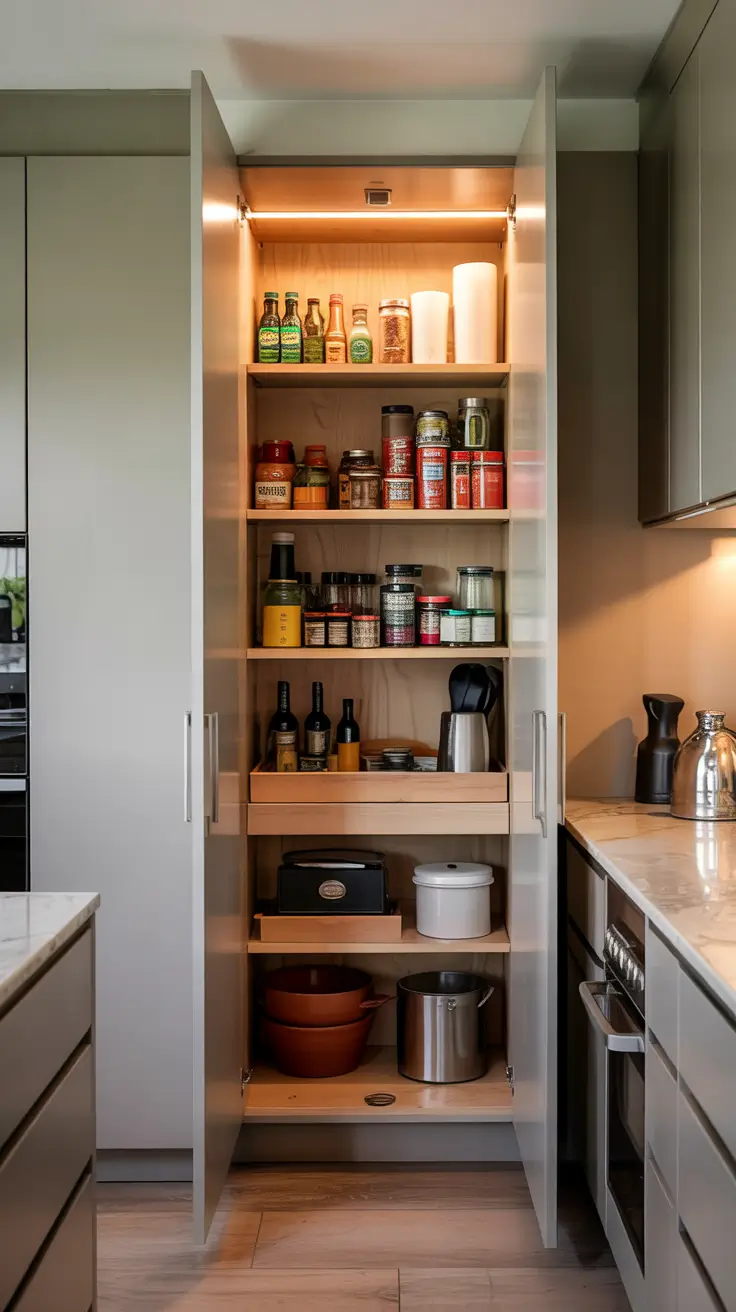
Vertical shelving, corner storage, and adjustable systems allow these spaces to work efficiently. Hidden access helps prevent the kitchen from feeling visually crowded, which is essential in small spaces.
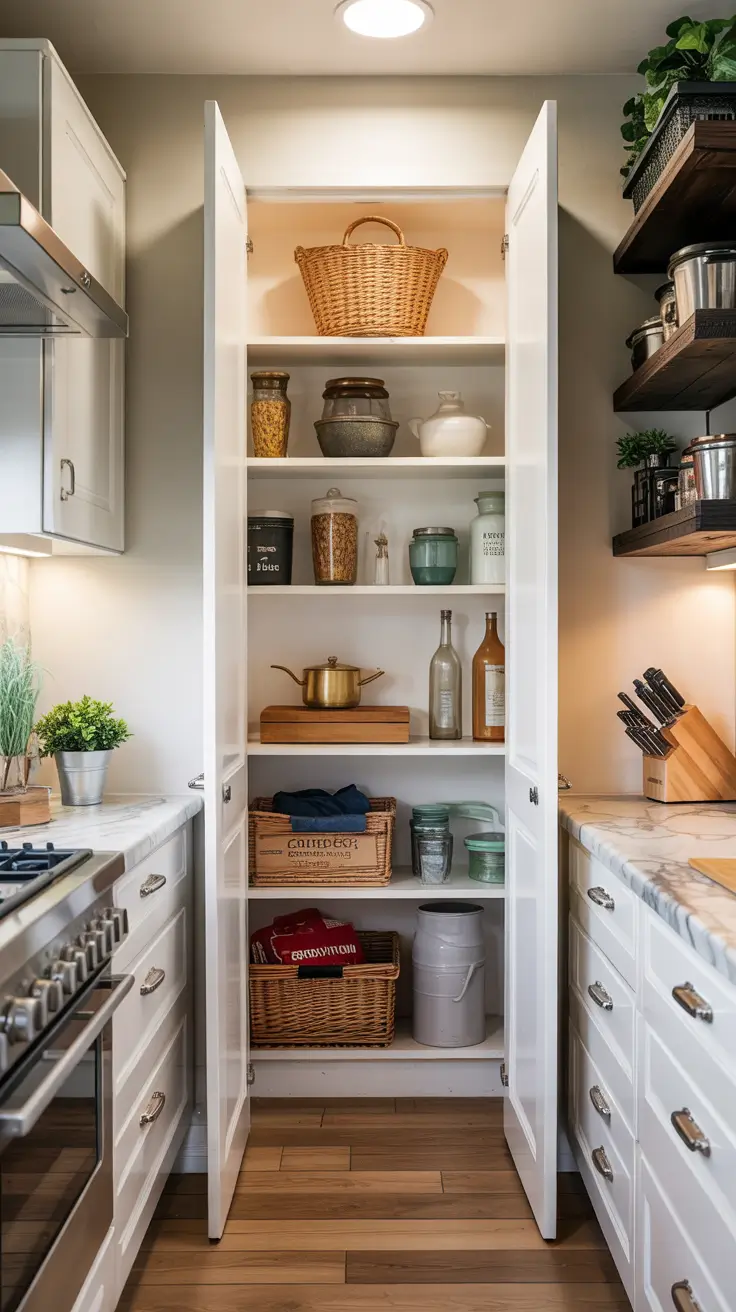
Personally, I find small walk-ins easier to maintain and organize. Many professionals note that limited space encourages better habits—and I’ve found that to be true.
What I’d add is clear zoning inside the pantry to keep items accessible and easy to maintain.
Hidden Pantry Ideas For Small Walk-In Pantry Spaces
Hidden pantry ideas for small walk-in pantry layouts focus on smart use of every inch. Concealed doors and full-height panels help these pantries blend into the kitchen design.
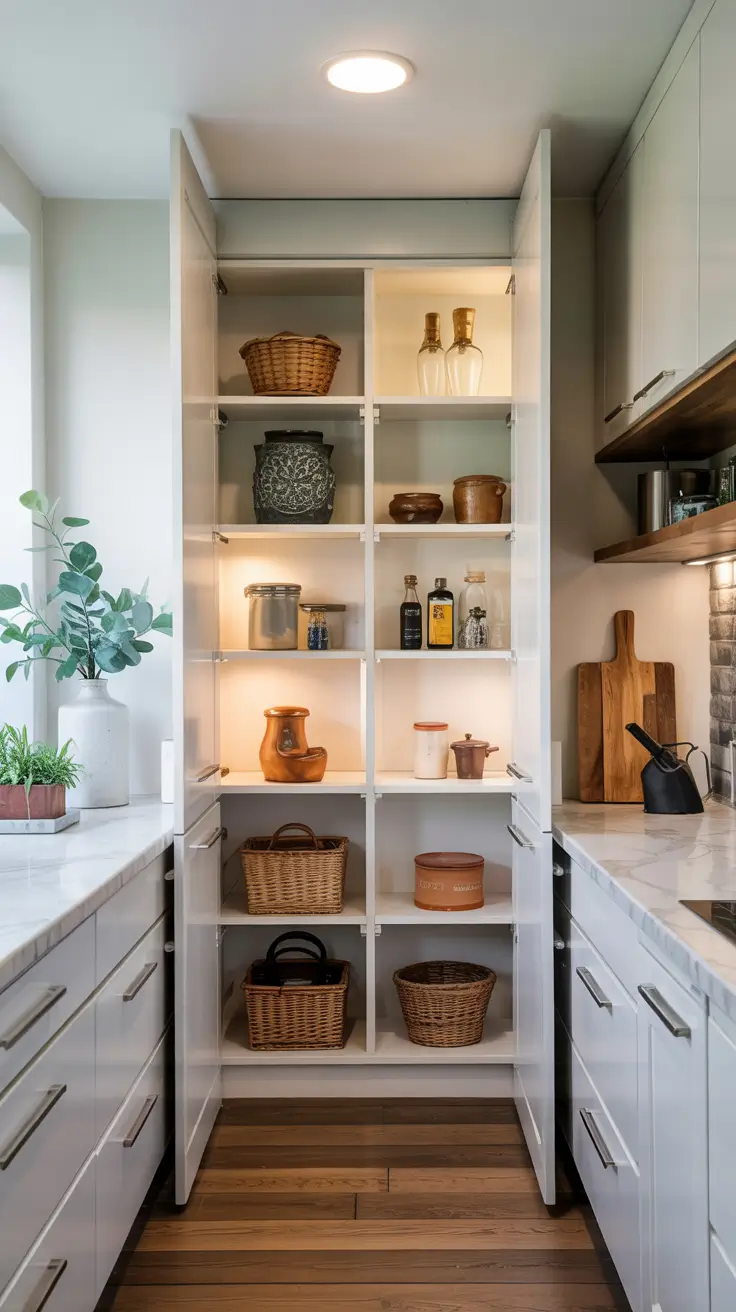
Inside, slim shelves, pull-out baskets, and lighter finishes improve visibility and usability. I always recommend bright interiors to offset the compact footprint.
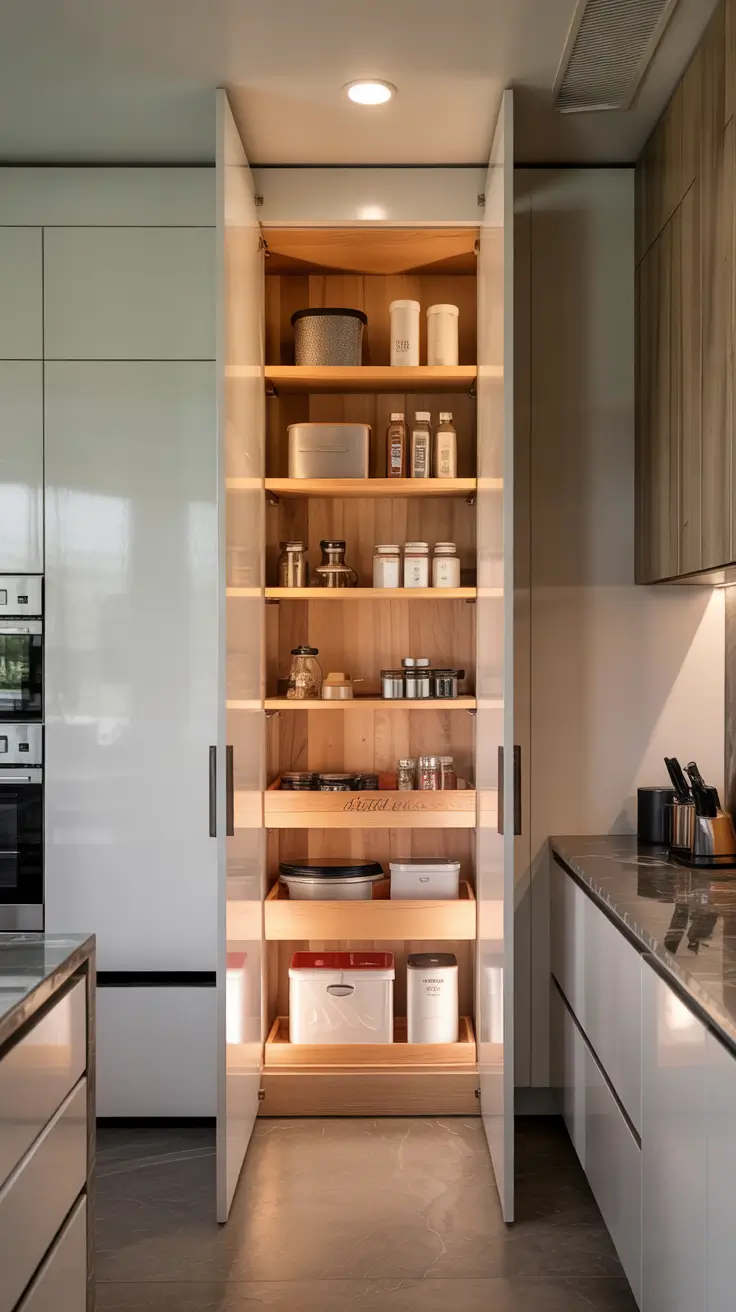
From my point of view, these pantries are ideal for modern households that value separation without sacrificing space. Designers frequently highlight their efficiency when well planned.
What’s often missing is proper ventilation. I suggest discreet airflow solutions to maintain freshness and prevent moisture buildup.
Hidden Pantry Ideas Layout For Smart Kitchens
When I design or analyze a smart kitchen, the hidden pantry ideas layout is always one of the first things I consider. A well-planned layout ensures that storage works with daily movement patterns instead of interrupting them. In 2026, layouts focus on efficiency, concealment, and intuitive access rather than size alone.
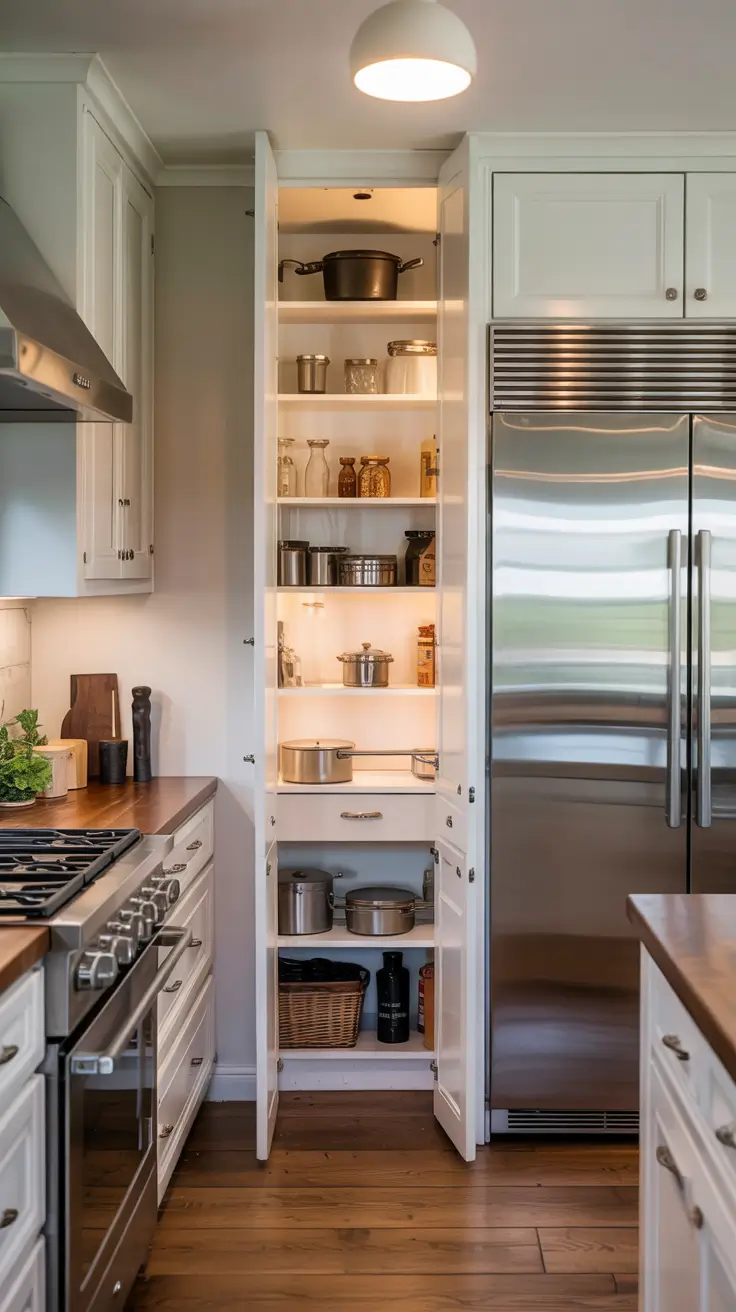
I usually see the best results when the pantry aligns with prep zones or sits near the refrigerator wall. Shelving depth, door swing, and internal circulation matter just as much as the exterior look. A smart layout allows the pantry to disappear visually while remaining incredibly functional.
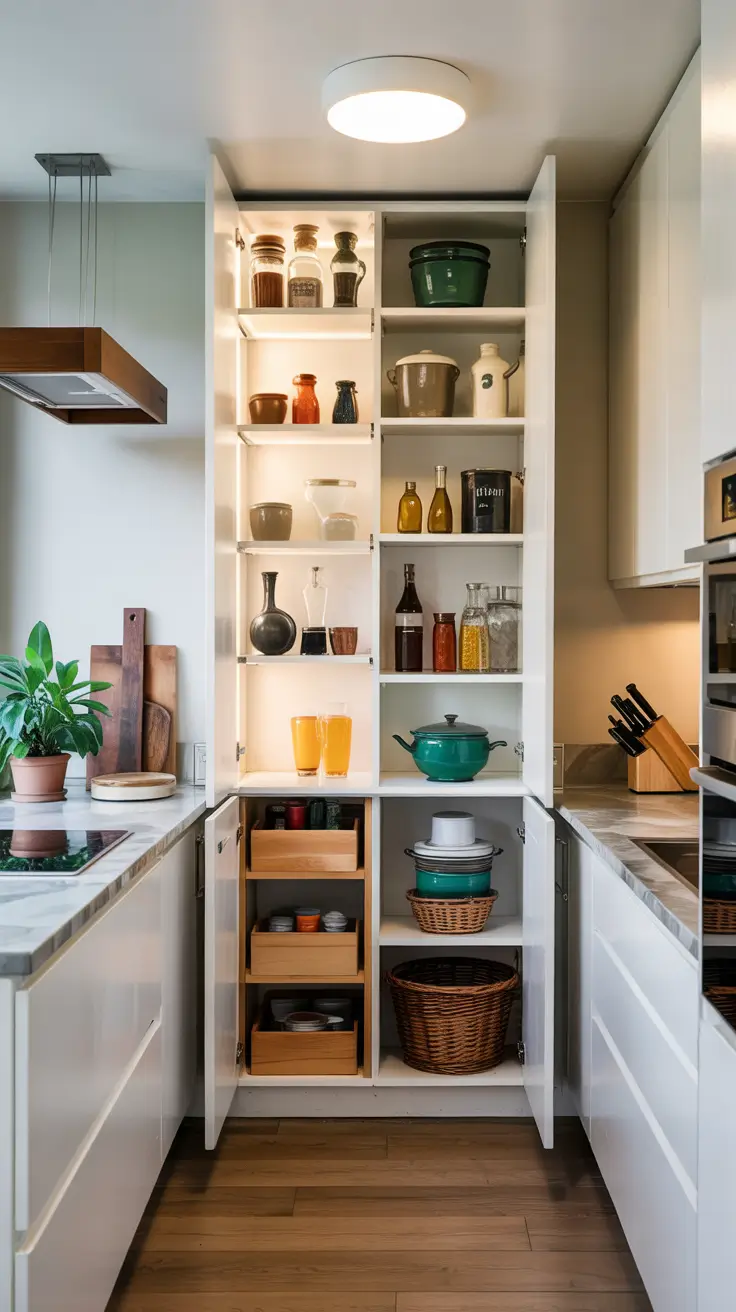
From my experience, homeowners underestimate how much layout affects stress levels in the kitchen. Many U.S. designers emphasize workflow over aesthetics, and I agree—when the pantry layout is right, the entire kitchen feels easier to use.
What’s often missing here is future planning. I always suggest allowing flexibility for changing storage needs, especially for families or evolving cooking habits.
Walk In Hidden Pantry Concepts For Daily Use
A walk in hidden pantry should feel like a natural extension of the kitchen, not a separate destination. In daily use, these pantries need to be easy to enter, well-lit, and logically organized while remaining visually concealed from the main space.
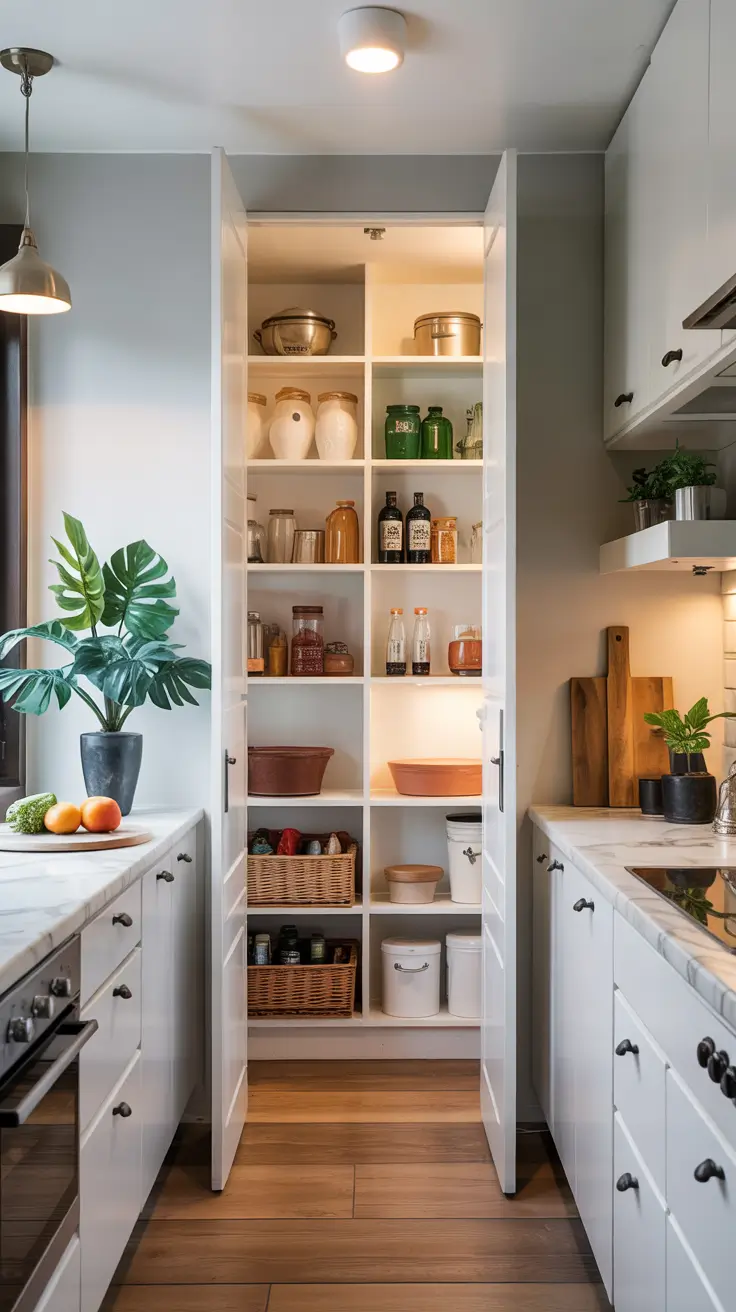
Inside, I recommend open shelving, clear sightlines, and zones for dry goods, appliances, and overflow storage. The door itself is usually integrated into cabinetry or wall panels, reinforcing the hidden effect without compromising accessibility.
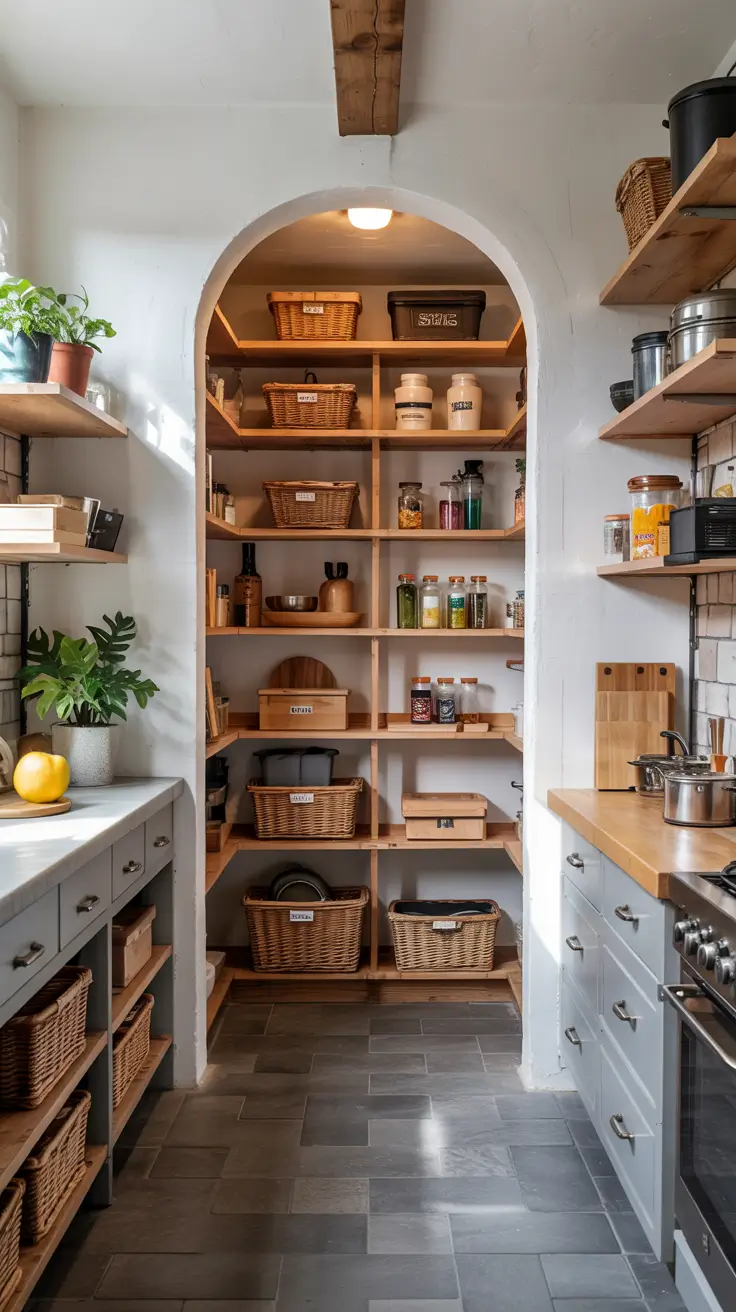
Personally, I find that walk-in pantries designed for daily use perform best when they’re not overdesigned. Designers featured in major U.S. interior publications often stress simplicity, and I’ve seen how that translates into long-term satisfaction.
What I often add to these spaces is a small counter or pull-out surface inside the pantry, which increases functionality without affecting the kitchen’s visual calm.
Hidden Pantry Ideas Small Spaces Kitchens Love
In compact homes, hidden pantry ideas small spaces solutions are often the difference between a cluttered kitchen and a calm one. These designs focus on concealment, vertical storage, and maximizing every available inch without overwhelming the room.
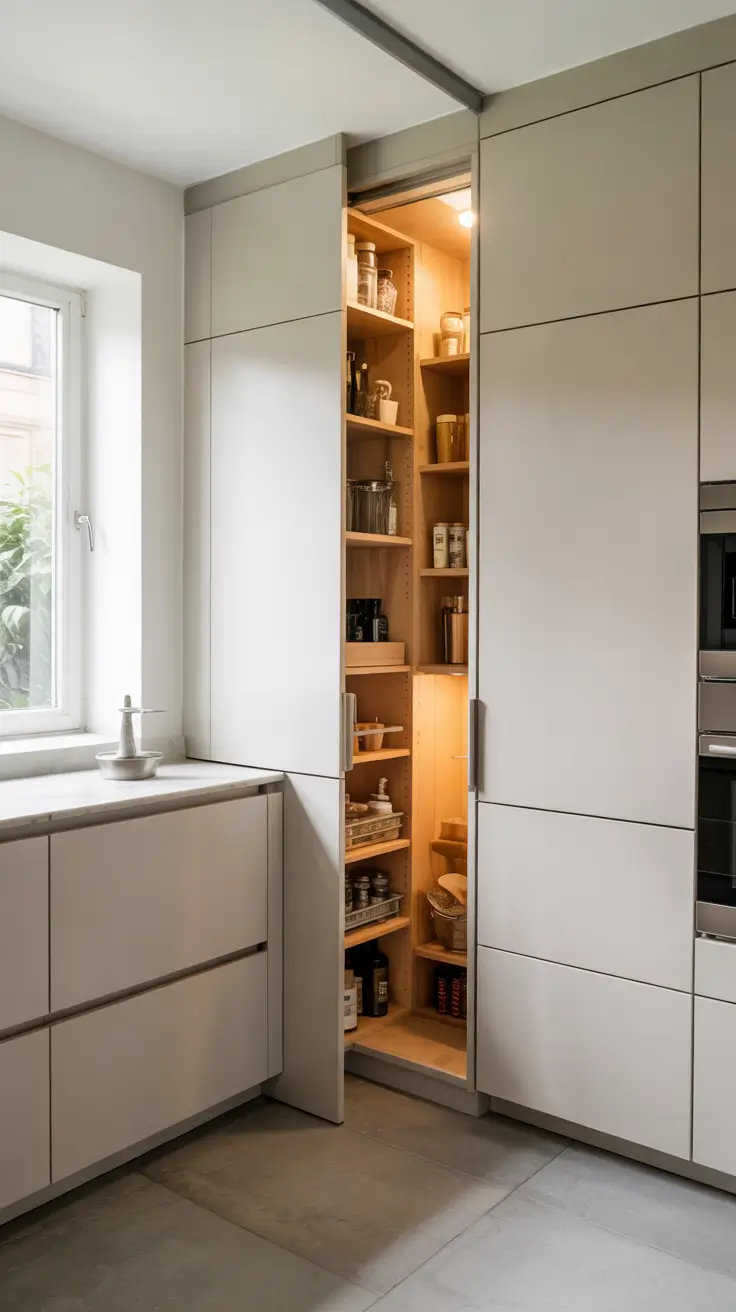
I frequently see pantries hidden behind tall cabinets, shallow wall panels, or even integrated into appliance surrounds. This approach works especially well in small spaces where visual continuity is essential.
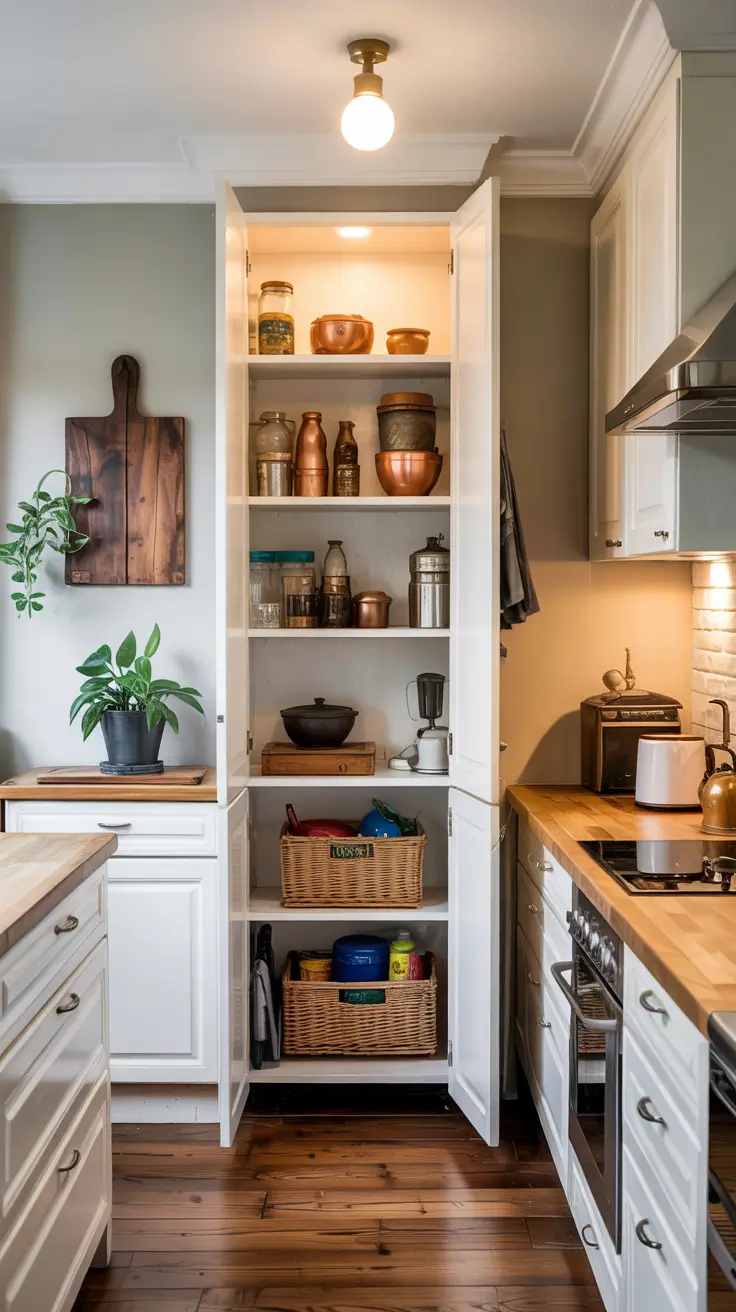
From my perspective, small kitchens benefit the most from hidden pantries because they reduce visual noise. Designers often note that fewer visible elements make a room feel larger, and hidden storage plays a major role in that illusion.
What’s sometimes missing is proper lighting inside these compact pantries. I always recommend built-in LED strips to ensure usability without drawing attention.
Small Kitchen Hidden Pantry Ideas That Save Space
A small kitchen requires careful decision-making, and hidden pantries help reclaim space without sacrificing storage. These ideas focus on slim profiles, multifunctional cabinetry, and discreet access points that don’t disrupt the kitchen’s proportions.
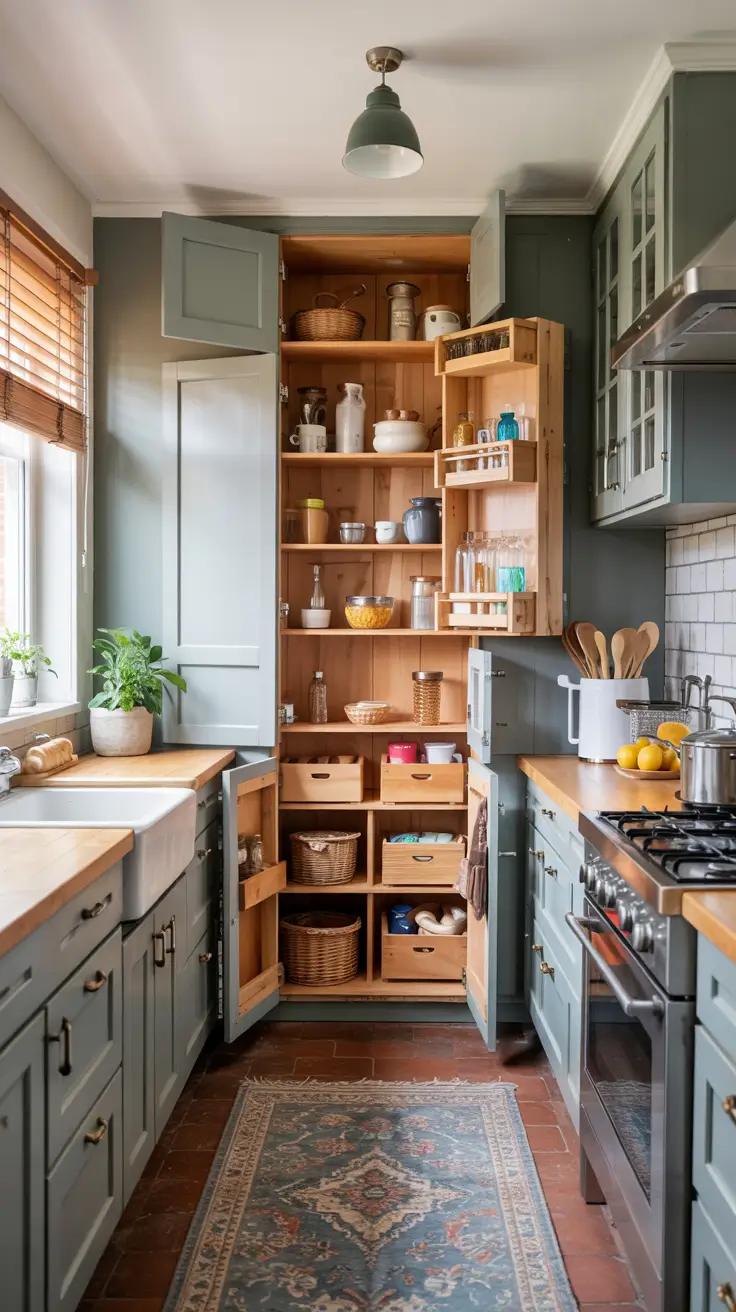
I often see success with pull-out pantry cabinets, concealed side doors, or pantry spaces tucked behind refrigerator panels. These solutions work because they use existing footprints rather than adding new elements.
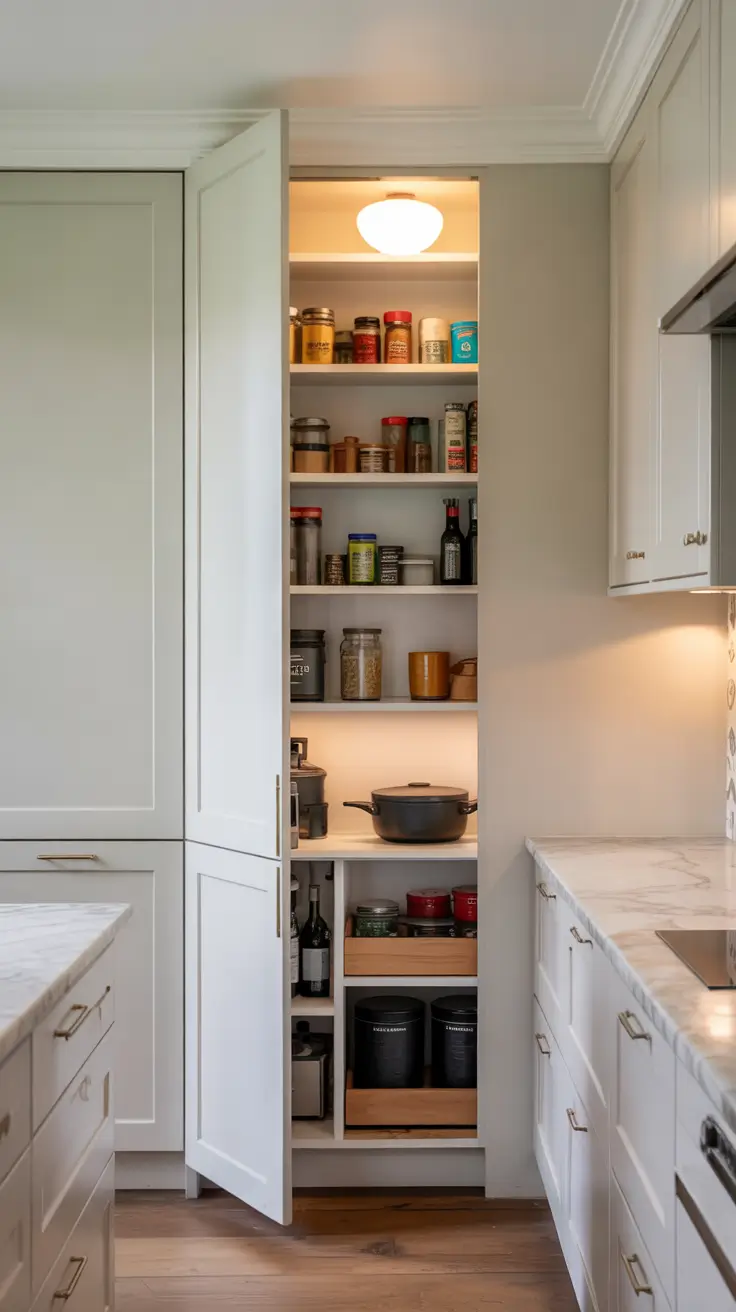
In my experience, space-saving pantry designs perform best when paired with disciplined organization. Interior experts frequently highlight that compact storage demands intention, and I’ve found that to be consistently true.
What I usually add is a clear internal hierarchy—frequently used items at eye level, long-term storage higher or lower—to maintain efficiency in tight spaces.
Creative Hidden Pantry Storage Ideas
Creative hidden pantry storage ideas push beyond standard shelving and embrace customization. In 2026, creativity shows up in unexpected placements, modular systems, and multi-functional storage hidden within walls or cabinetry.
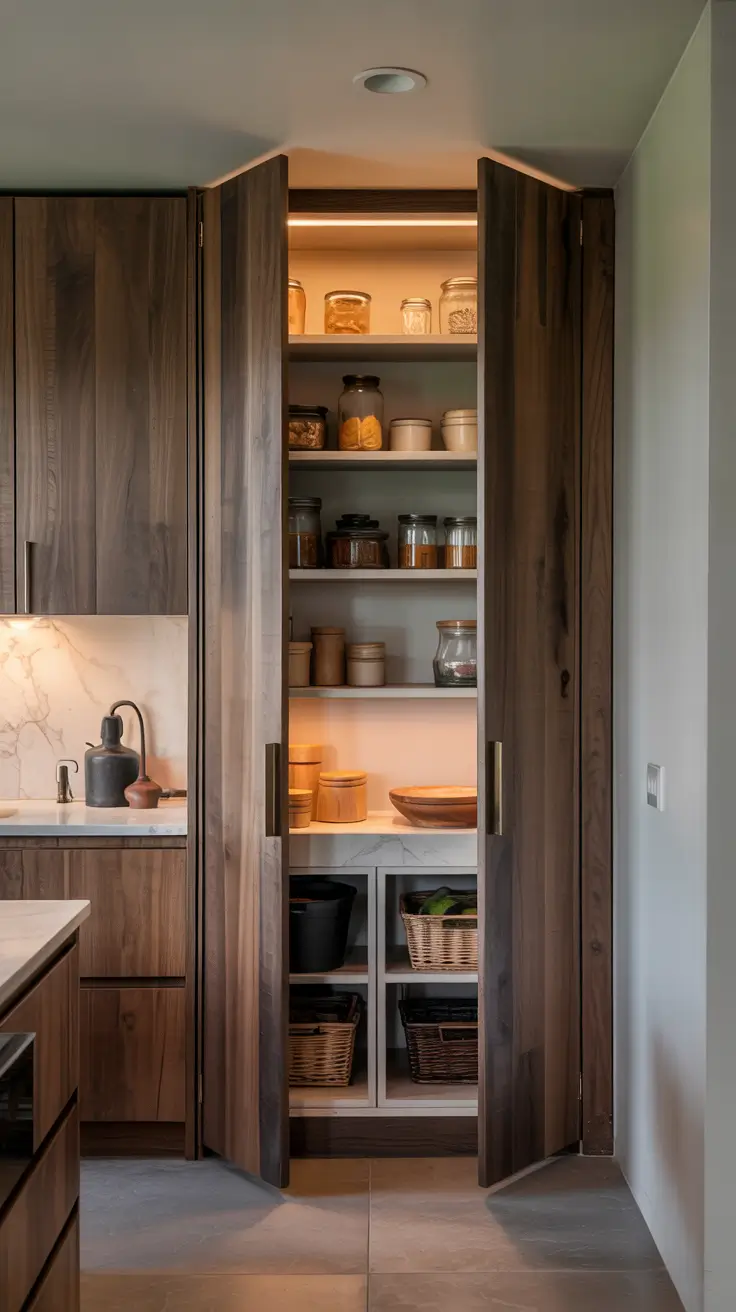
I’ve seen pantries hidden behind sliding panels, rotating walls, and even integrated furniture elements. These ideas work best when creativity serves function rather than novelty.
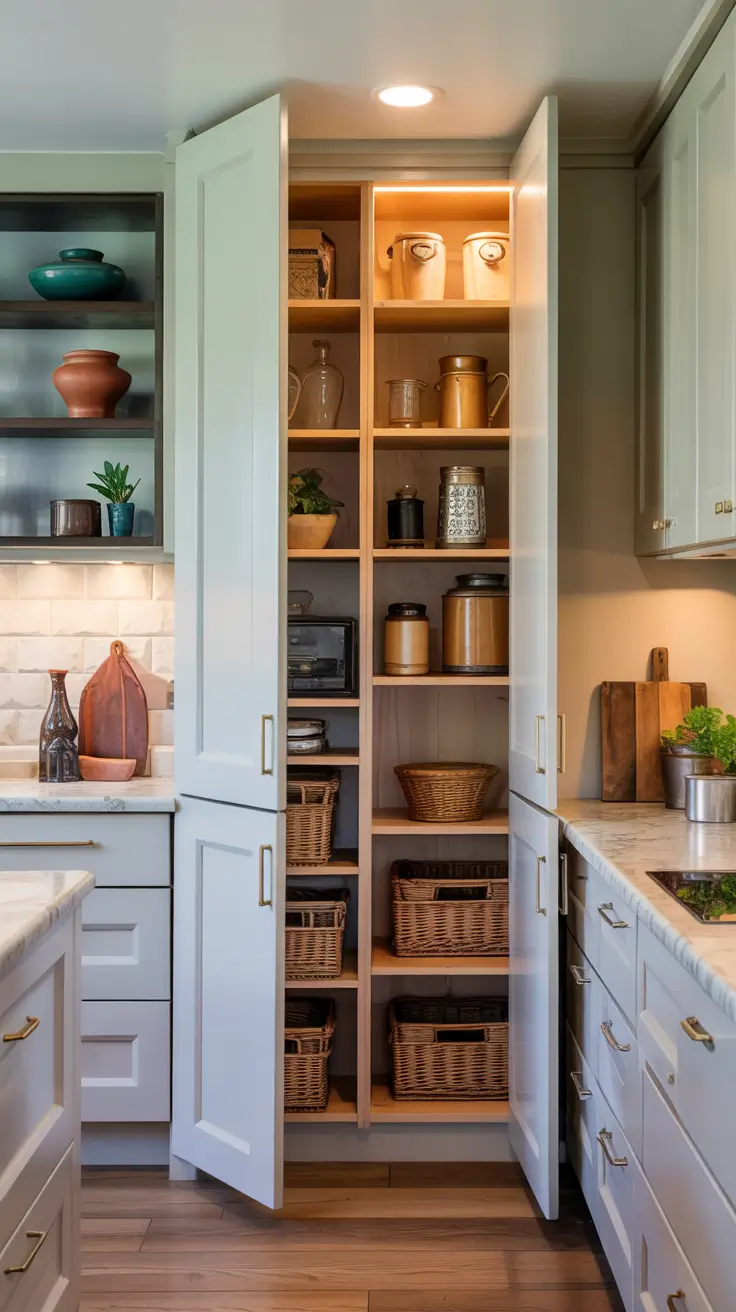
From my point of view, the most successful creative solutions are the ones that feel obvious once you see them. Many designers stress that good design should feel intuitive, and I completely agree.
What’s often missing is durability planning. I always suggest choosing materials and hardware that can handle daily use, especially in innovative or custom mechanisms.
Pantry Hidden Door Ideas In Modern Kitchens
Pantry hidden door ideas are central to creating a seamless modern kitchen. These doors are designed to disappear into cabinetry, wall panels, or architectural elements, maintaining a clean visual field.
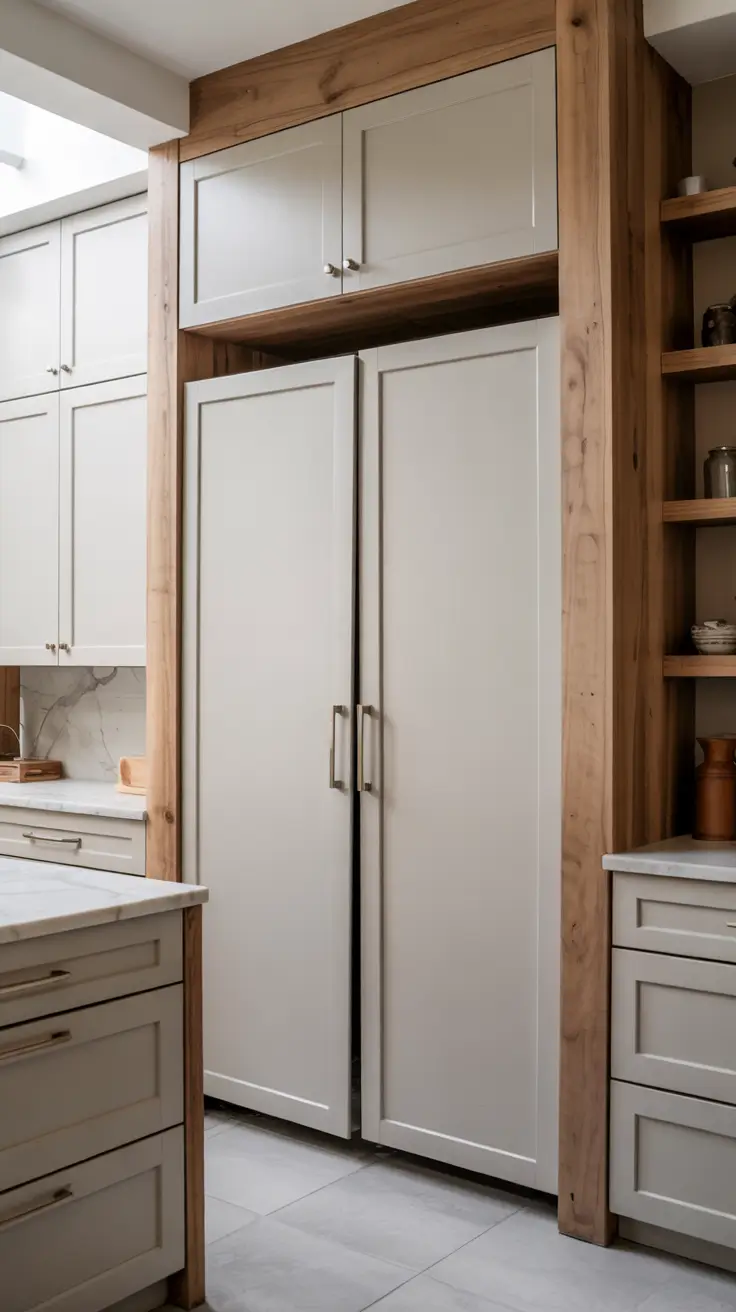
Common solutions include flush doors, push-latch systems, and doors clad in the same material as surrounding cabinets. In modern kitchen cabinets, consistency is what sells the illusion.
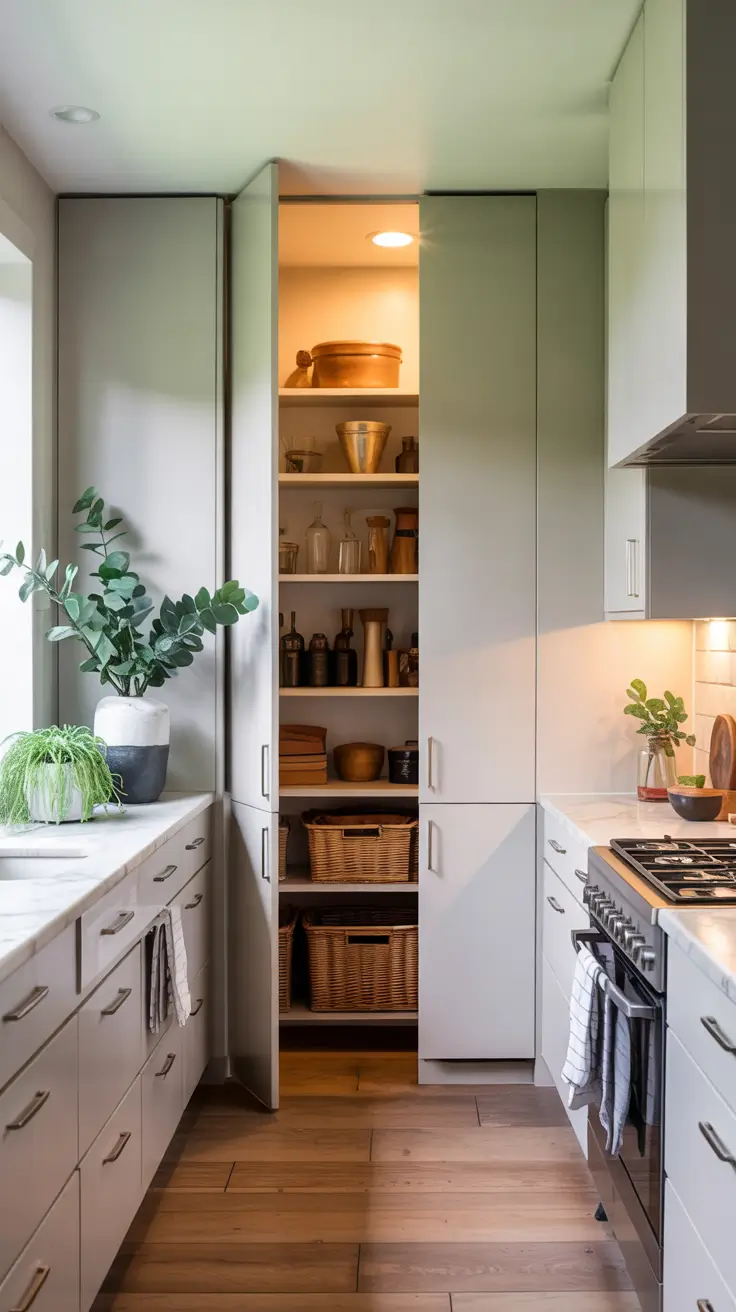
Personally, I believe hidden doors elevate the entire kitchen when done correctly. Many U.S. designers emphasize that doors should never interrupt a kitchen’s rhythm, and hidden pantry entrances support that principle.
What’s sometimes missing is clear wayfinding for guests or new users. I often recommend subtle cues, like handle placement or lighting, to keep the design intuitive.
Hidden Door Ideas In Wall Pantry Designs
Hidden door ideas in wall pantry designs take concealment a step further by integrating pantry access directly into architectural walls. These designs are especially effective in open-plan homes where the kitchen blends into living areas.
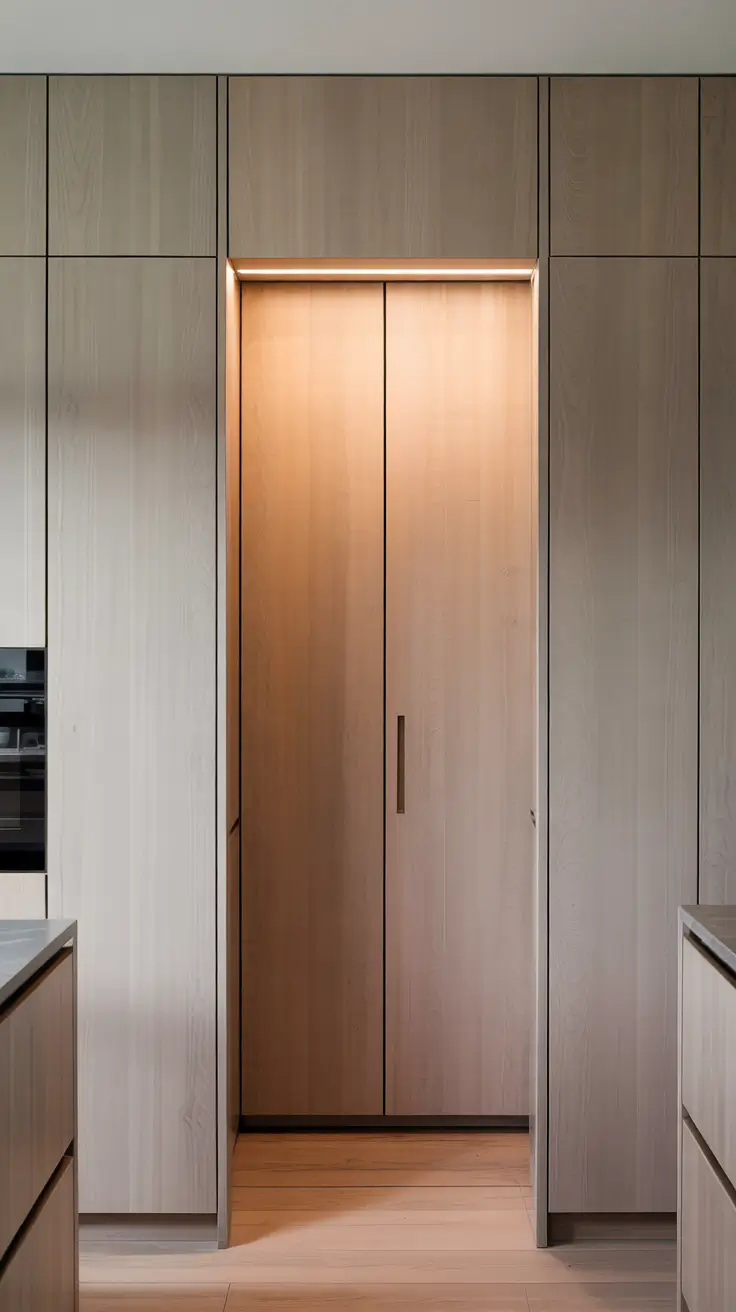
I usually see these doors finished with wall paneling, plaster, or wood slats, making the pantry nearly invisible. This approach works well when the pantry is large but the visual footprint needs to stay minimal.
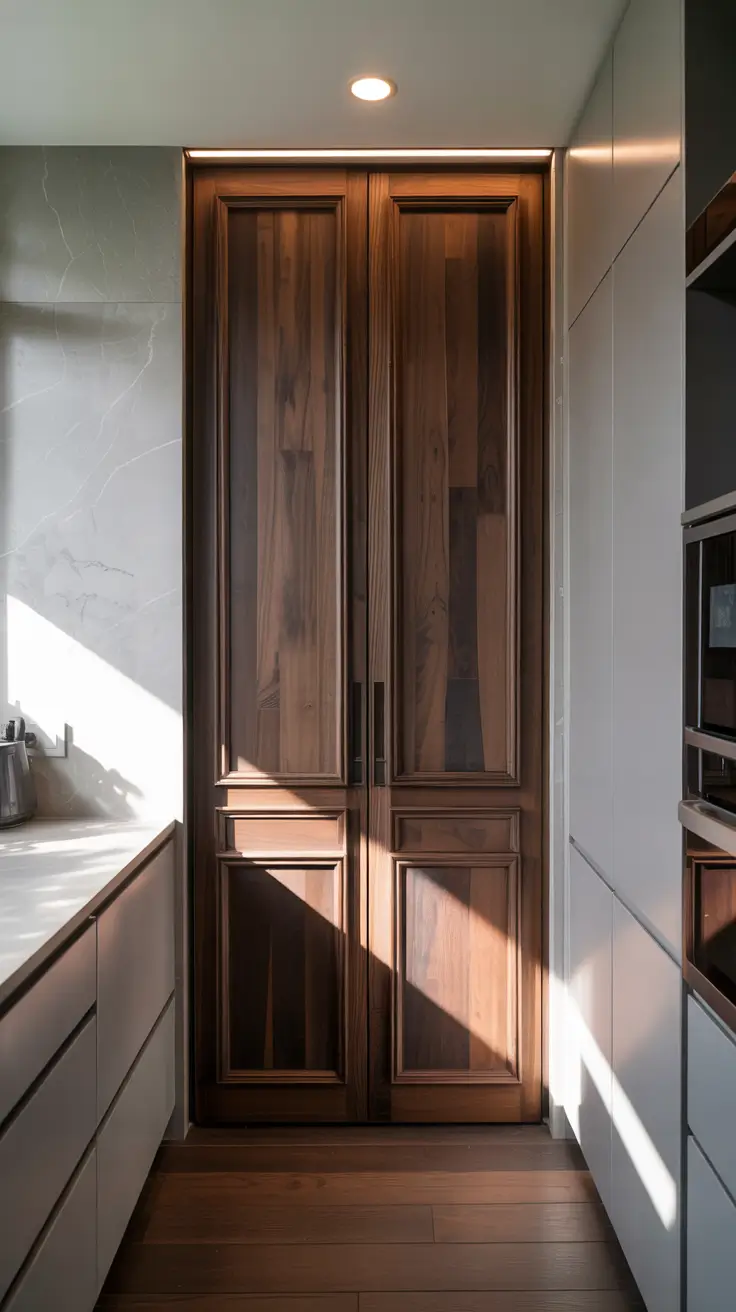
From my experience, wall-integrated pantry doors create a sense of architectural sophistication. Design publications often highlight this technique as a hallmark of high-end interiors, and I see why.
What I often add to these designs is acoustic insulation within the wall structure to maintain quiet operation and reinforce the hidden effect.
Hidden Pantry Ideas Under Stairs
Using the space beneath stairs for pantry storage is one of the smartest hidden solutions I see in modern homes. These areas are often overlooked, yet they offer valuable square footage that can be transformed into highly functional storage without affecting the main kitchen layout.
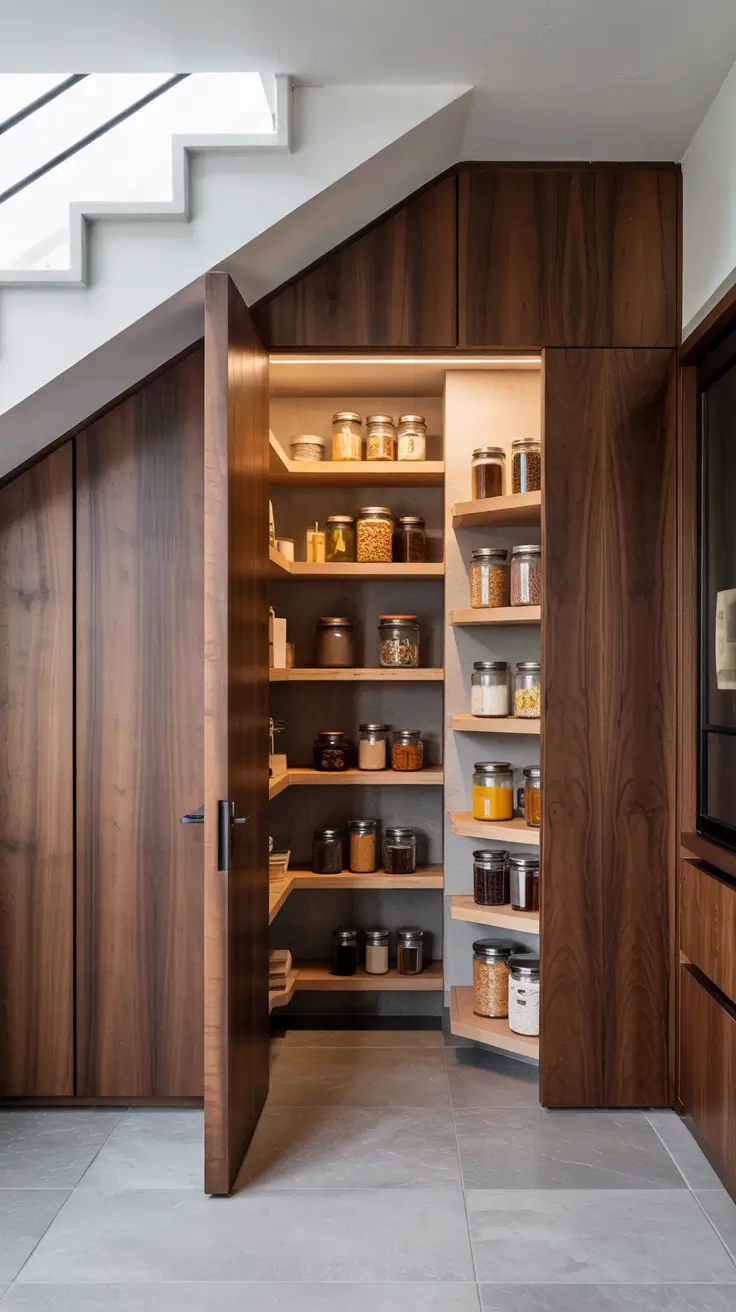
In most designs, the pantry follows the slope of the staircase, with custom shelving, pull-out drawers, or angled cabinets. I recommend closed fronts that blend into the wall or nearby cabinetry so the pantry remains visually hidden while still being easy to access.
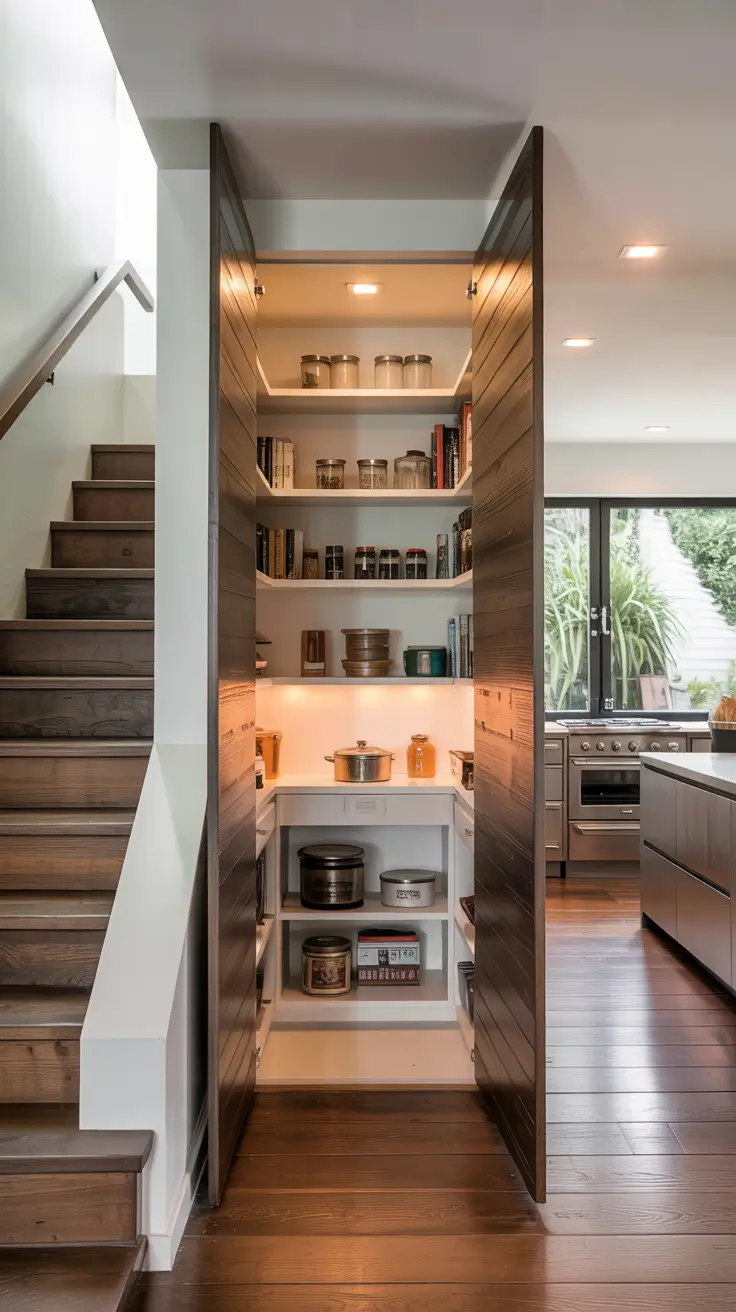
From my experience, under-stair pantries work best when they’re treated like custom furniture rather than leftover space. Many designers point out that unconventional areas demand thoughtful detailing, and I fully agree.
What’s often missing here is proper lighting. I always suggest installing motion-activated lighting to make these deeper spaces practical and comfortable to use.
Stairs And Basement Steps Hidden Pantry Ideas
Basement steps and secondary staircases offer unique opportunities for hidden pantry storage, especially in multi-level homes. These locations allow storage to stay close to the kitchen without occupying prime visual space.
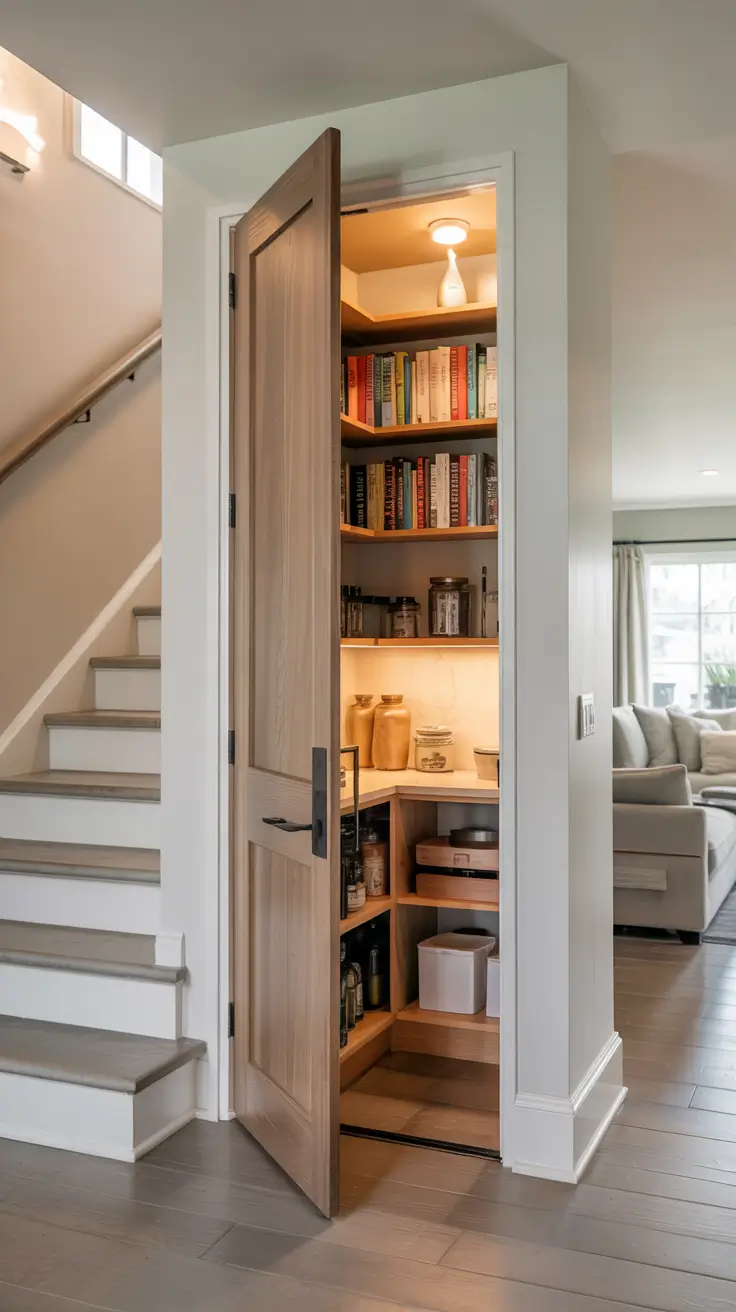
I often see these pantries designed with recessed doors or flush panels that align with the stair wall. Inside, shelving is typically deeper, making it ideal for bulk items, seasonal supplies, or overflow storage.
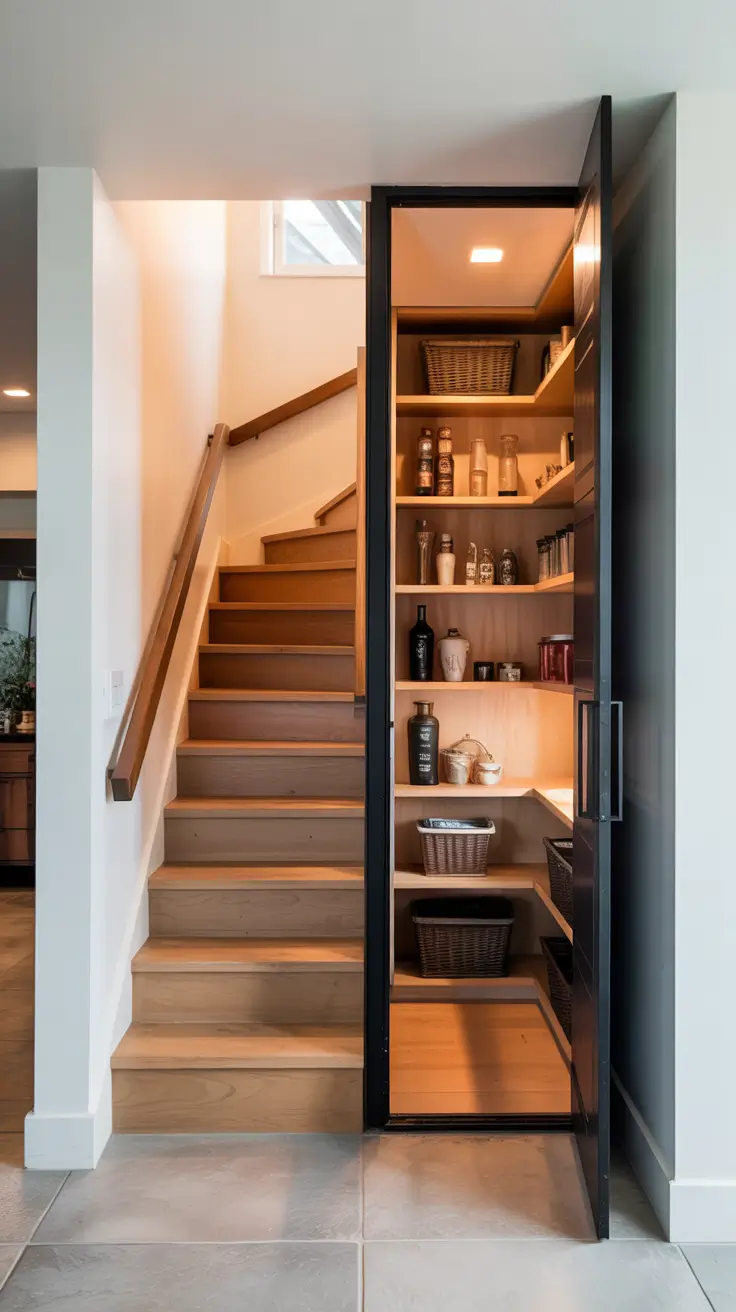
Personally, I like this approach because it keeps everyday kitchen zones uncluttered. Designers frequently note that separating daily and long-term storage improves organization, and this solution supports that idea well.
What I usually recommend adding is clear internal zoning so items don’t get lost in deeper storage areas.
Hidden Pantry Ideas Under Basement Steps
A pantry hidden under basement steps is a practical solution for homes where kitchen-adjacent space is limited. These pantries often function as extended storage rather than daily-access zones, which makes concealment even more important.
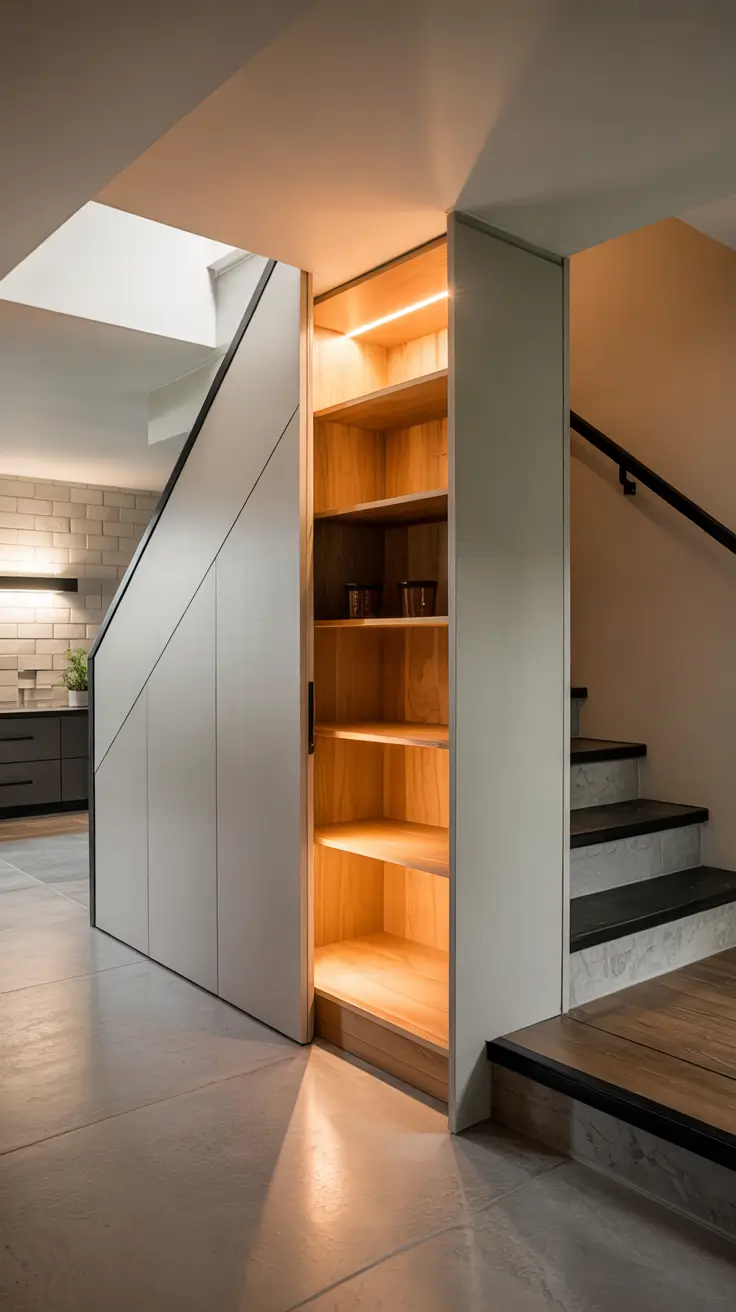
Design-wise, I recommend solid doors that match nearby walls or cabinetry, keeping the pantry visually discreet. Inside, sturdy shelving and labeled zones help maintain order in a space that may not be accessed every day.
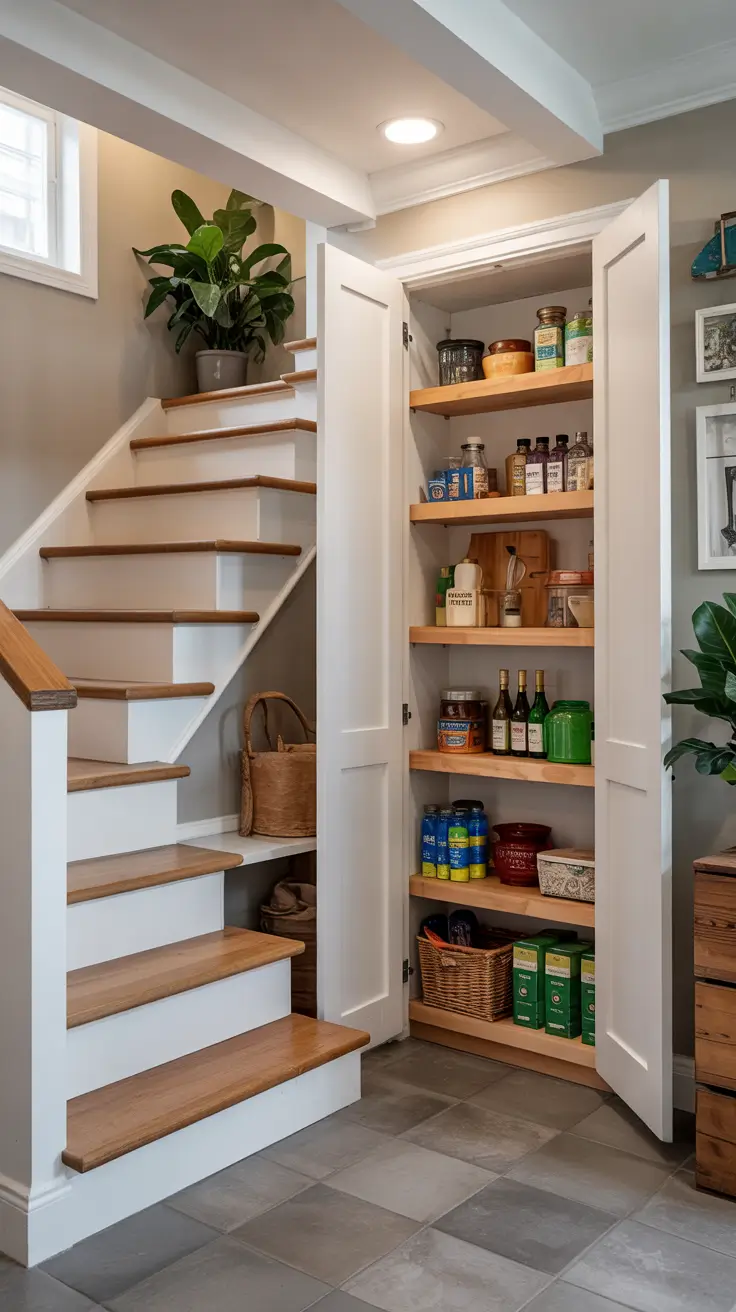
From my perspective, this type of pantry is ideal for households that buy in bulk or entertain frequently. Interior experts often suggest separating backup storage from everyday items, and this approach supports that strategy.
What’s often missing is ventilation. I always advise including airflow solutions to protect stored goods, especially in basement-adjacent spaces.
Hidden Pantry Ideas For Small Spaces With Style
Designing hidden pantry ideas small spaces requires balancing efficiency with aesthetics. In compact homes, every decision matters, and hidden pantries help maintain visual clarity while adding essential storage.
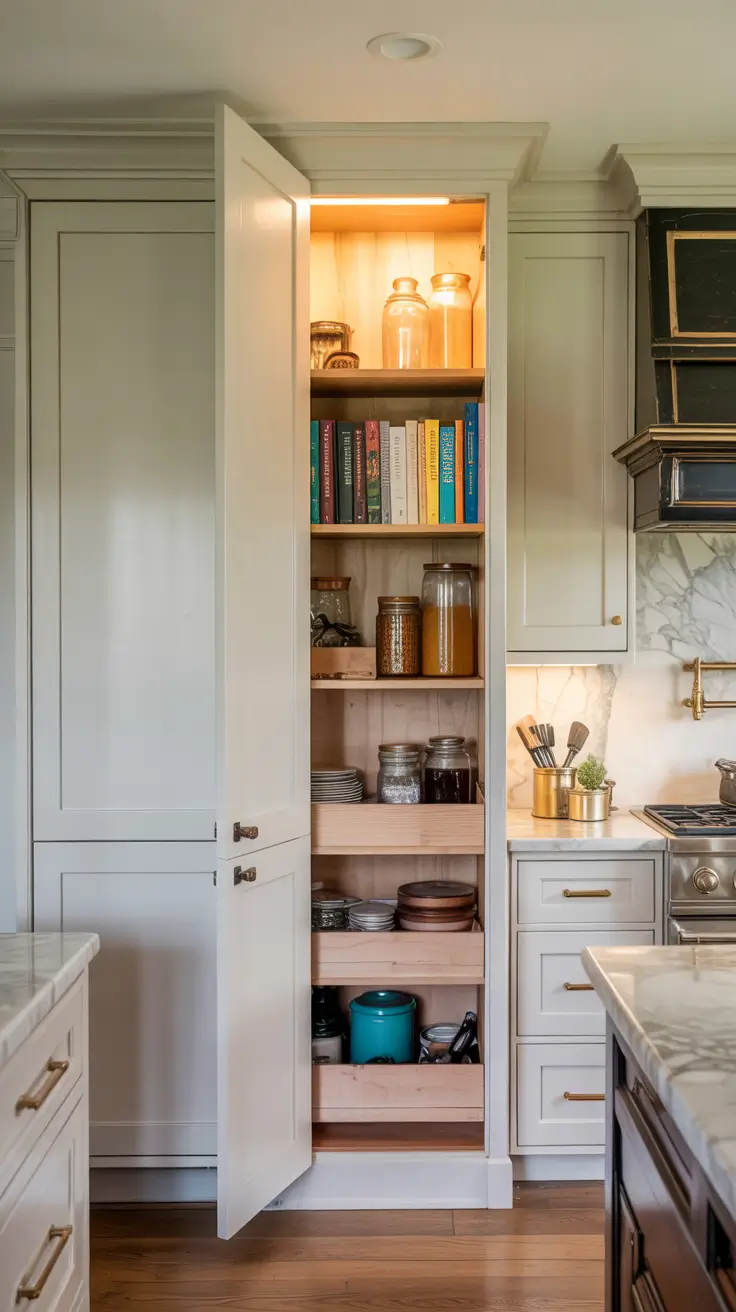
I usually see these pantries integrated into tall cabinets, narrow wall sections, or unused corners. Finishes play a major role—light tones, seamless panels, and minimal hardware keep the space feeling intentional rather than crowded.
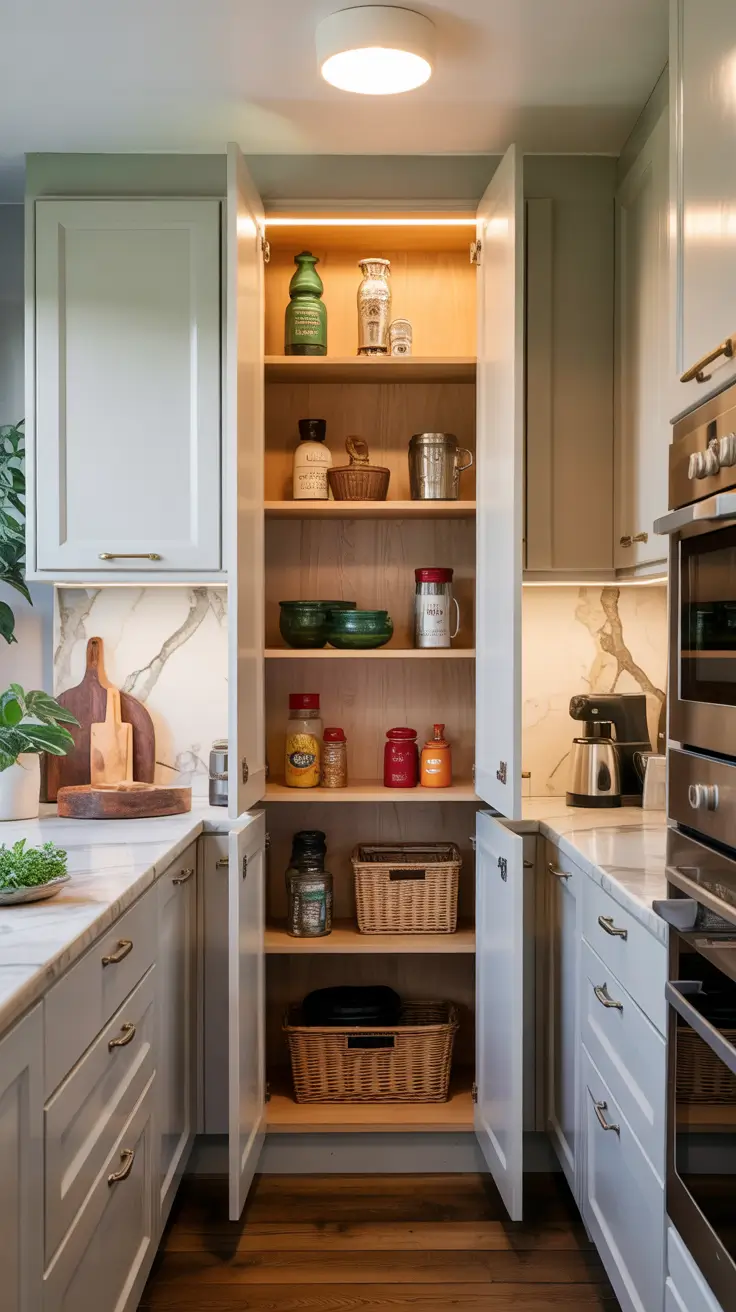
In my experience, style doesn’t have to be sacrificed in small homes. Many U.S. designers emphasize that thoughtful detailing elevates even the most compact interiors, and I see that consistently with hidden pantries.
What I often add is a reflective or lighter interior finish to visually expand the pantry and improve usability.
Kitchen Hidden Pantry Ideas Behind Cabinets
Placing a pantry behind cabinet walls is one of the most discreet kitchen ideas hidden pantry solutions available. This approach works particularly well in modern layouts with long cabinet runs.
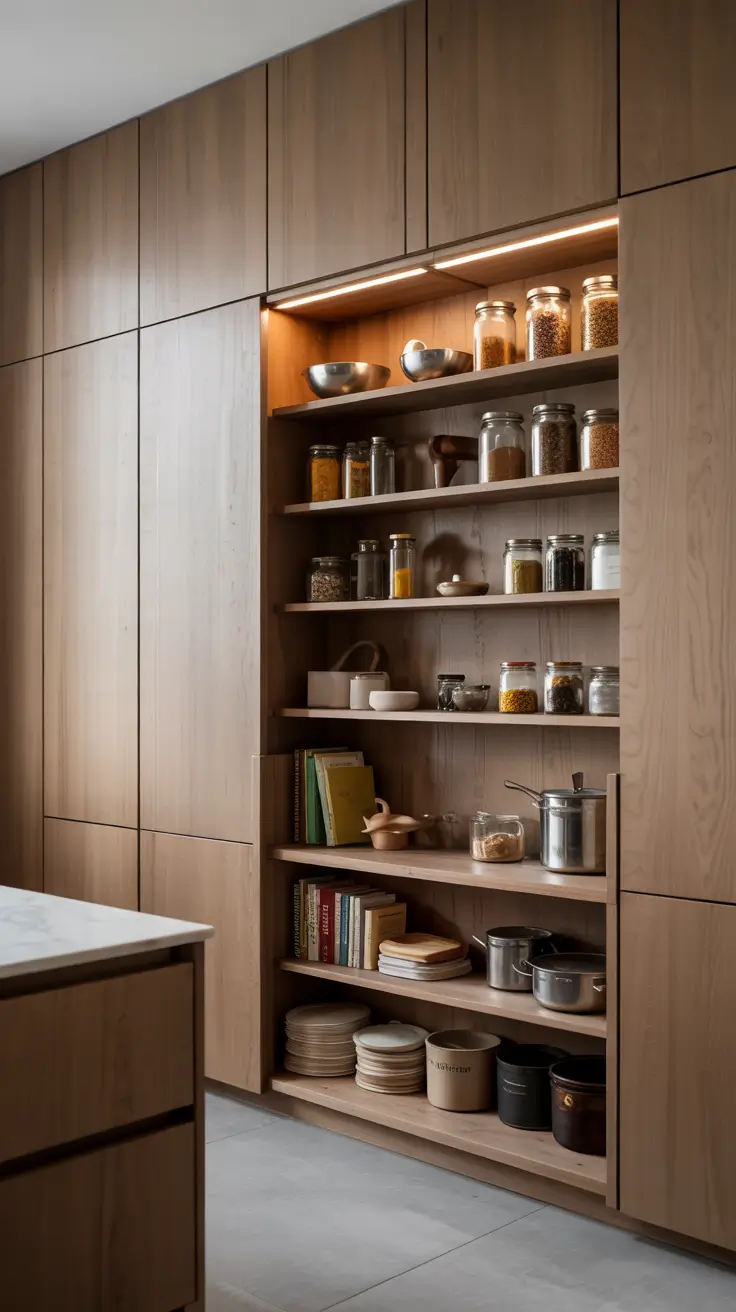
Typically, the pantry entrance is concealed within a bank of modern kitchen cabinets, using identical materials and proportions. Inside, the pantry can be surprisingly spacious, offering shelving, drawers, and even appliance storage.
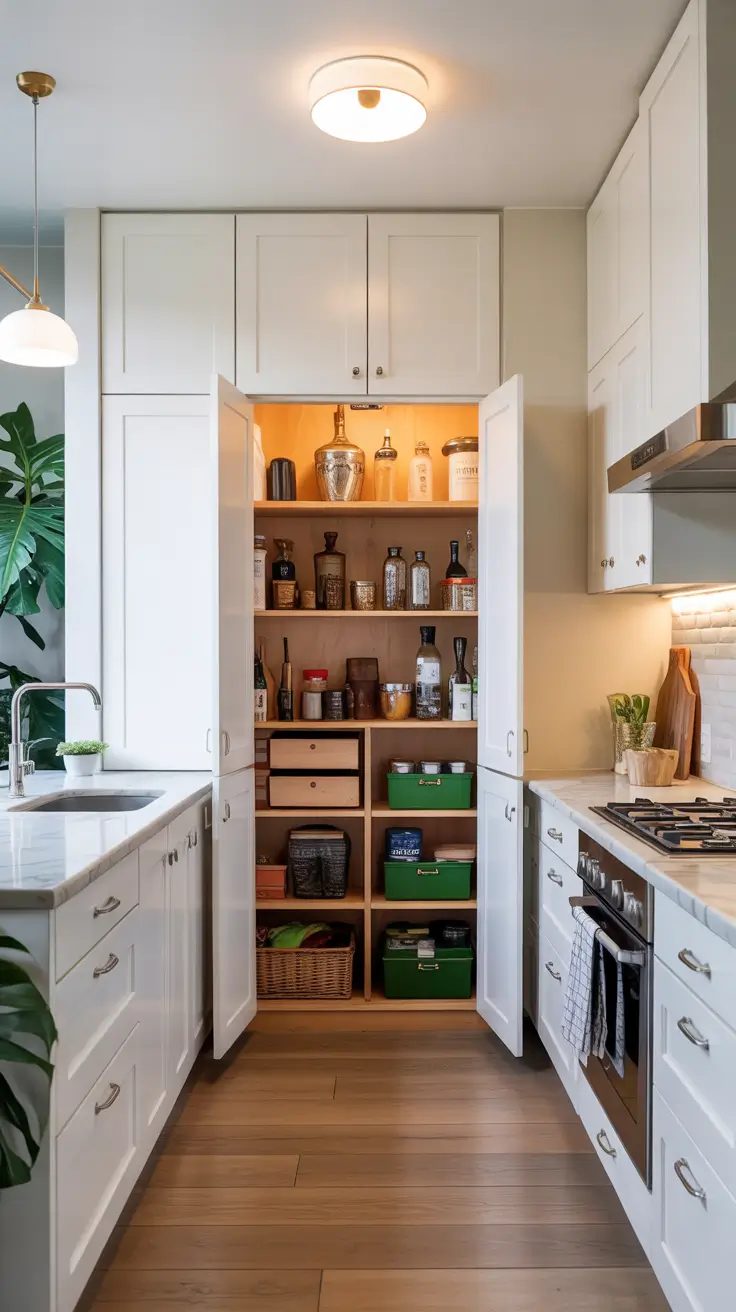
From my point of view, this solution is ideal for homeowners who value minimalism. Designers often highlight that uninterrupted cabinet walls create a sense of calm, and hidden pantries support that philosophy.
What’s sometimes missing is intuitive access. I recommend subtle design cues, like handle placement or lighting, to ensure the pantry remains user-friendly.
Modern Kitchen Cabinets With Concealed Pantry
Modern kitchen cabinets with concealed pantry access represent the height of integrated design in 2026. These systems blur the line between furniture and architecture, making storage feel like part of the room’s structure.
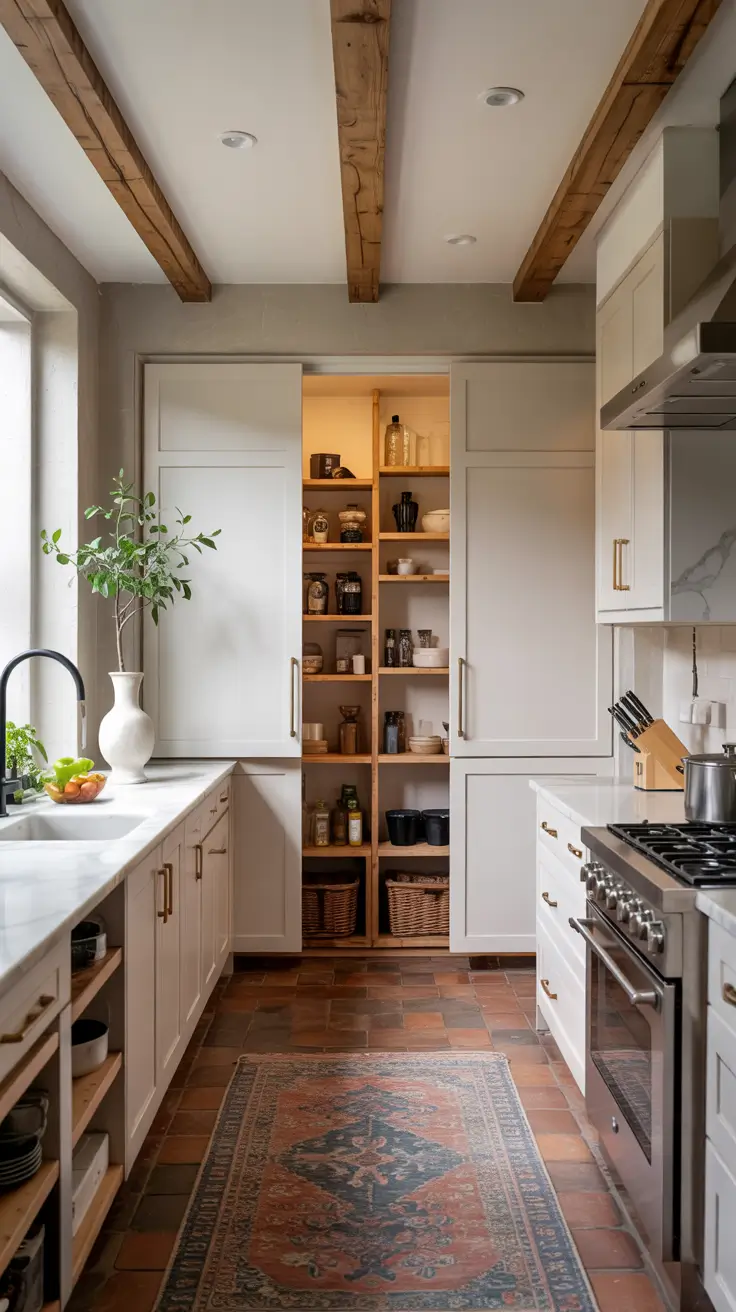
Cabinetry is often custom-built, with full-height doors, touch-latch mechanisms, and internal organizers designed for specific storage needs. This level of customization ensures both durability and ease of use.
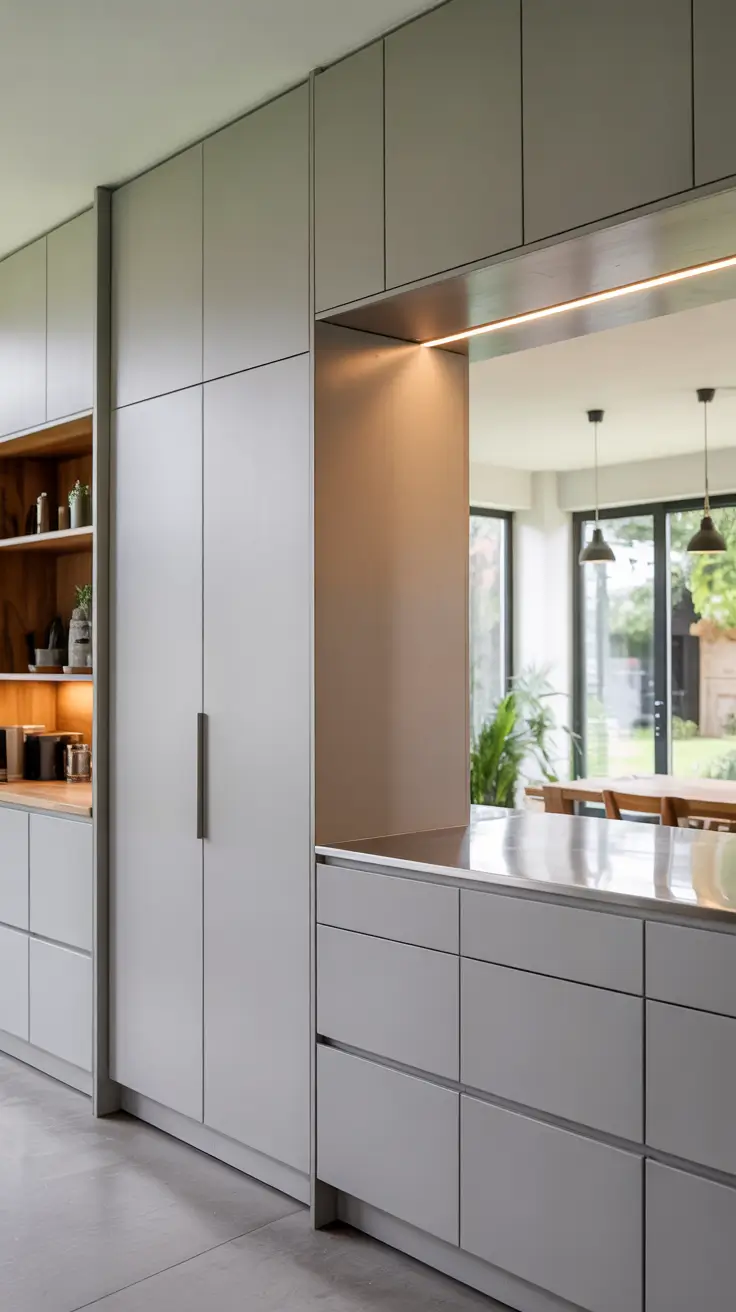
Personally, I believe concealed pantry cabinets are worth the investment. Many interior design professionals stress that cabinetry defines the kitchen’s success, and hidden pantries elevate that impact.
What I usually suggest adding is modular interior components so the pantry can adapt over time as storage needs change.
Hidden Butlers Pantry Makeover Ideas
Hidden butlers pantry makeover ideas focus on transforming transitional spaces into efficient, concealed work zones. In 2026, these pantries are designed to disappear when not in use, maintaining a polished kitchen aesthetic.
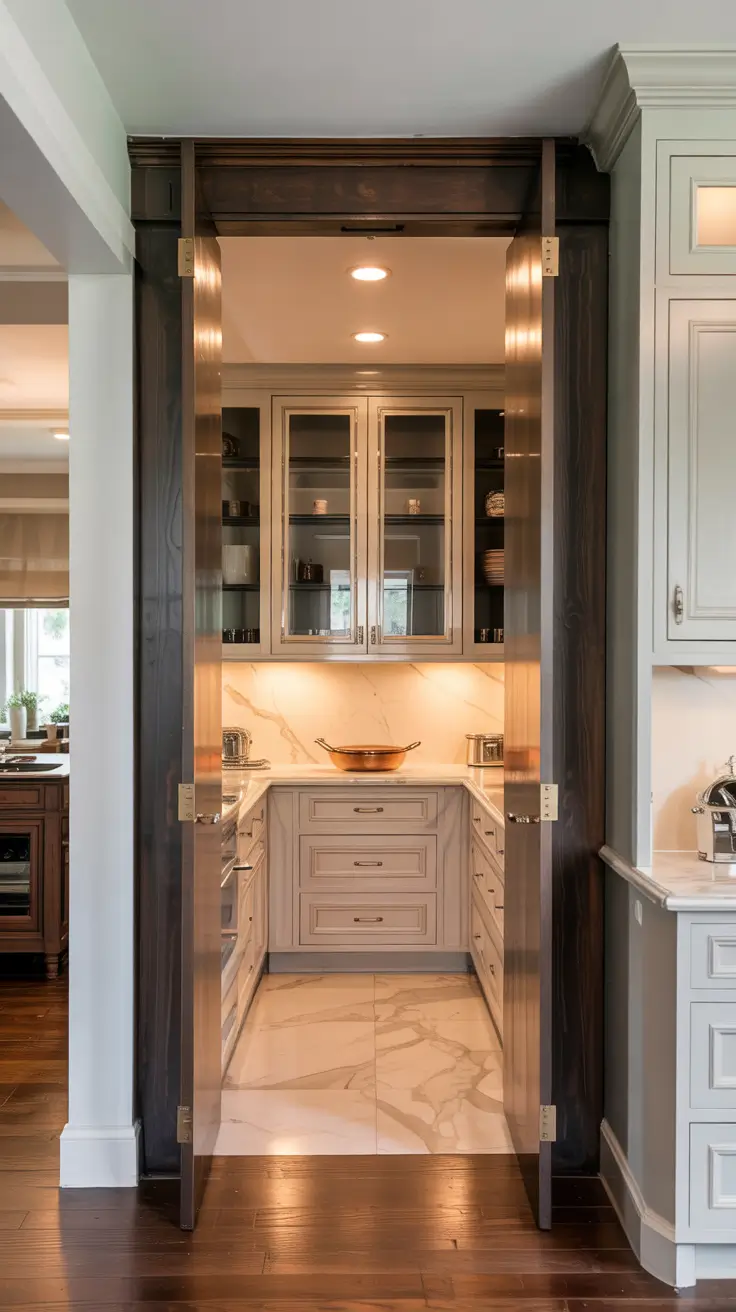
I often see these spaces hidden behind sliding panels or full-height doors that match the surrounding cabinetry. Inside, they typically include additional counters, storage, and sometimes secondary appliances.
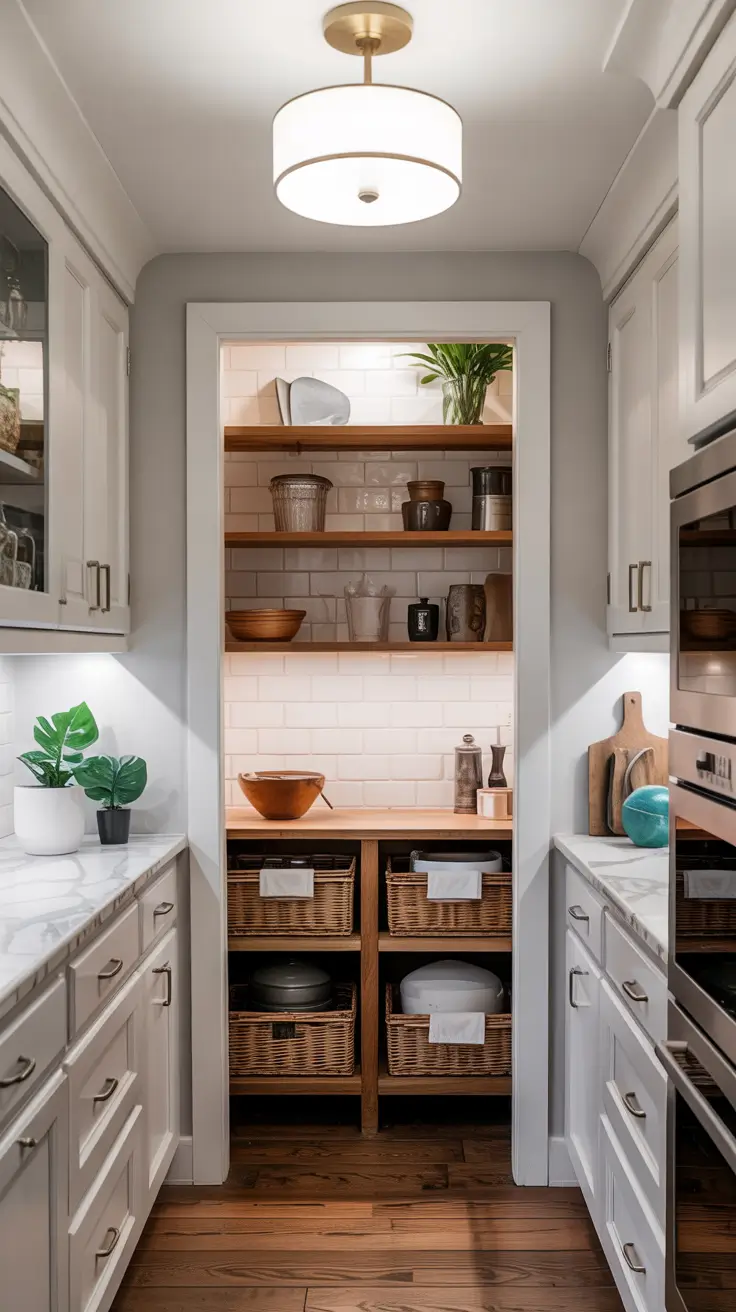
From my experience, a hidden butler’s pantry significantly improves kitchen workflow, especially for entertaining. Design experts frequently note that separating prep from presentation enhances both function and appearance.
What’s often missing is cohesive lighting. I always recommend layered lighting to ensure the space is both practical and visually comfortable.
Hidden Pantry Ideas That Improve Kitchen Layout
Well-designed hidden pantry ideas layout can dramatically improve how a kitchen functions on a daily basis. When the pantry is integrated thoughtfully, it supports natural movement between cooking, storage, and prep zones without adding visual clutter to the kitchen.
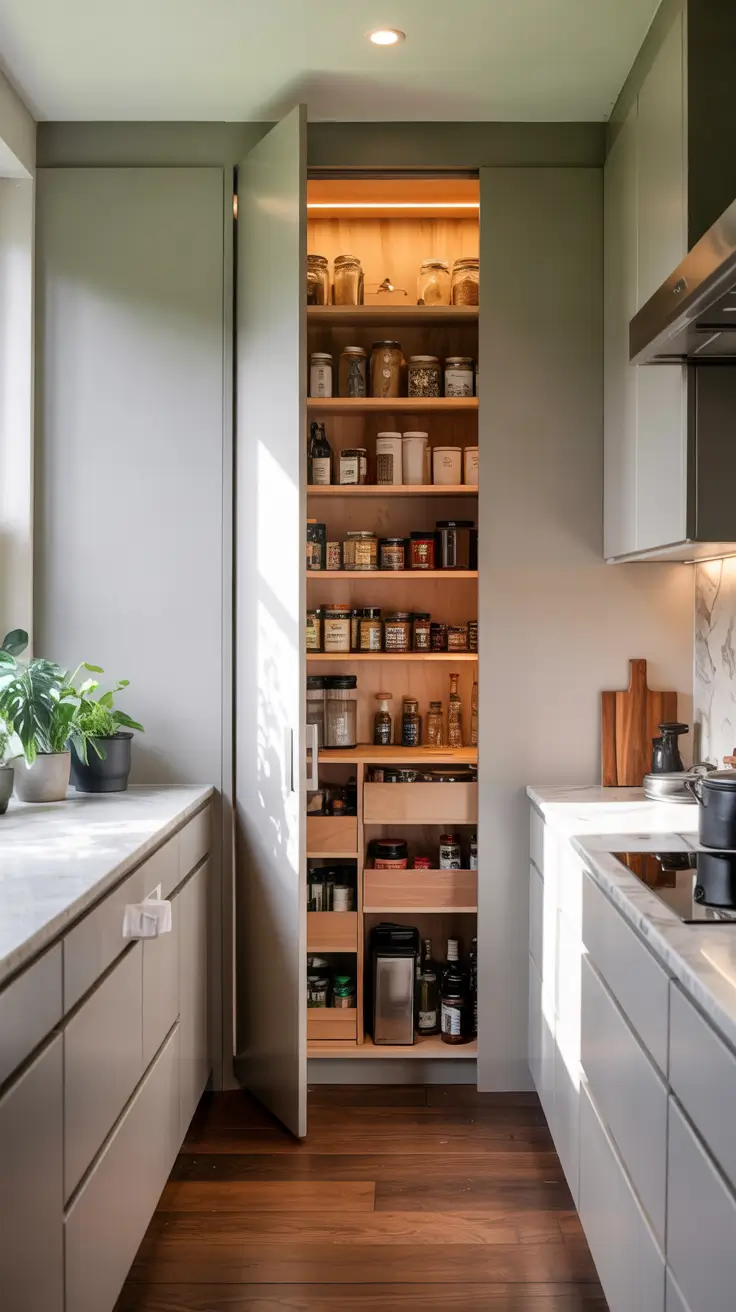
I often see the best results when pantries are placed near refrigerators or cooking areas, allowing ingredients to be accessed efficiently. Hidden doors and integrated cabinetry ensure that this functionality doesn’t interfere with the overall design.
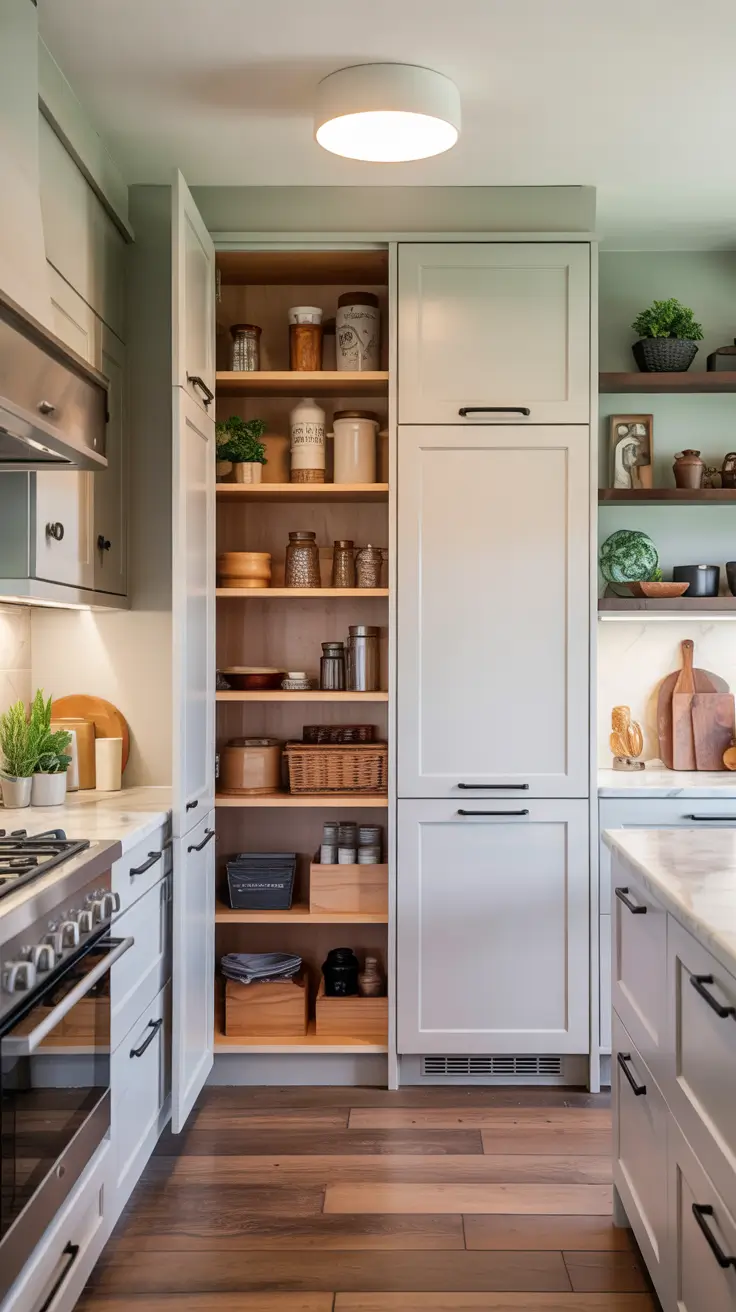
From my experience, layout-focused pantry design reduces frustration and saves time. Many U.S. kitchen designers emphasize workflow as the foundation of good design, and hidden pantries play a key role in that process.
What’s often missing is coordination with lighting and electrical planning. I always recommend aligning pantry placement with these systems early in the design phase.
Common Layout Mistakes In Hidden Pantry Design
Despite their popularity, hidden pantry ideas can fail if layout mistakes are made. The most common issue I see is poor access—pantries placed too far from key kitchen zones or hidden behind awkward door swings.
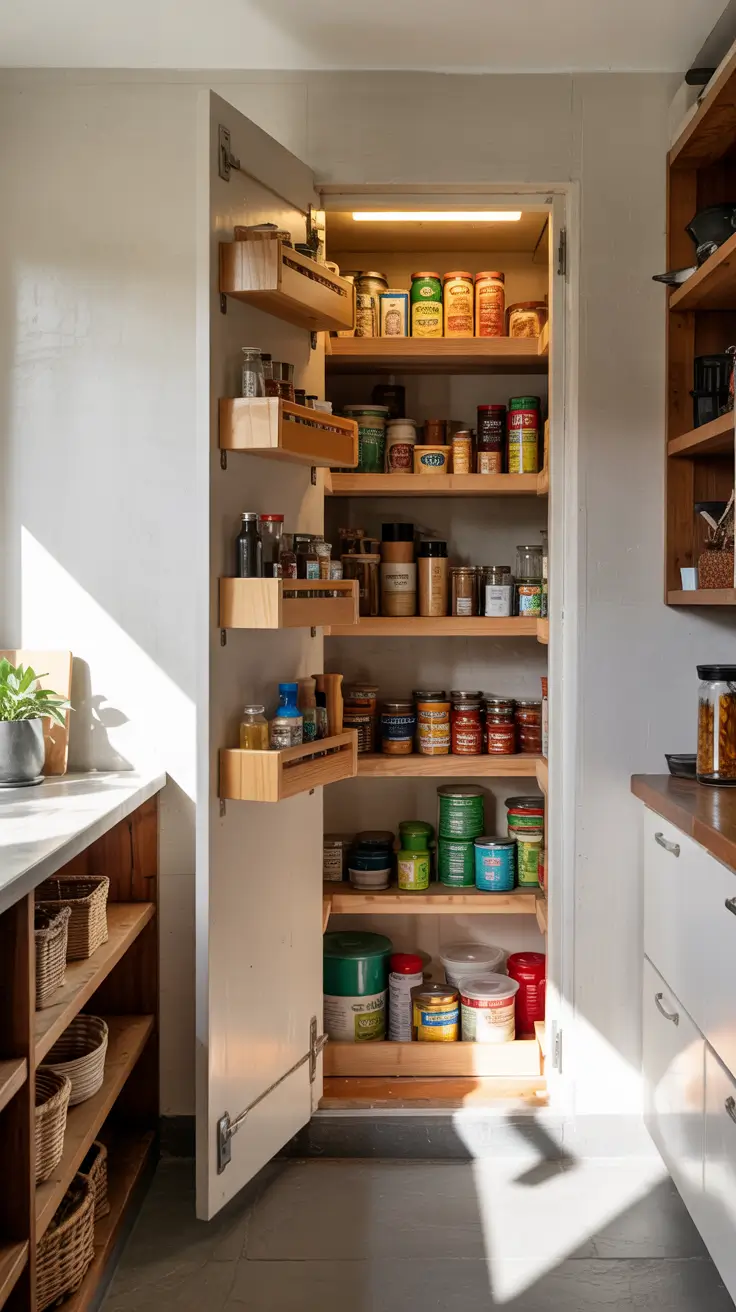
Another mistake is overcomplicating the design. Heavy doors, deep shelving, or narrow walkways can make the pantry difficult to use. A successful layout should feel intuitive and comfortable, not clever for the sake of it.
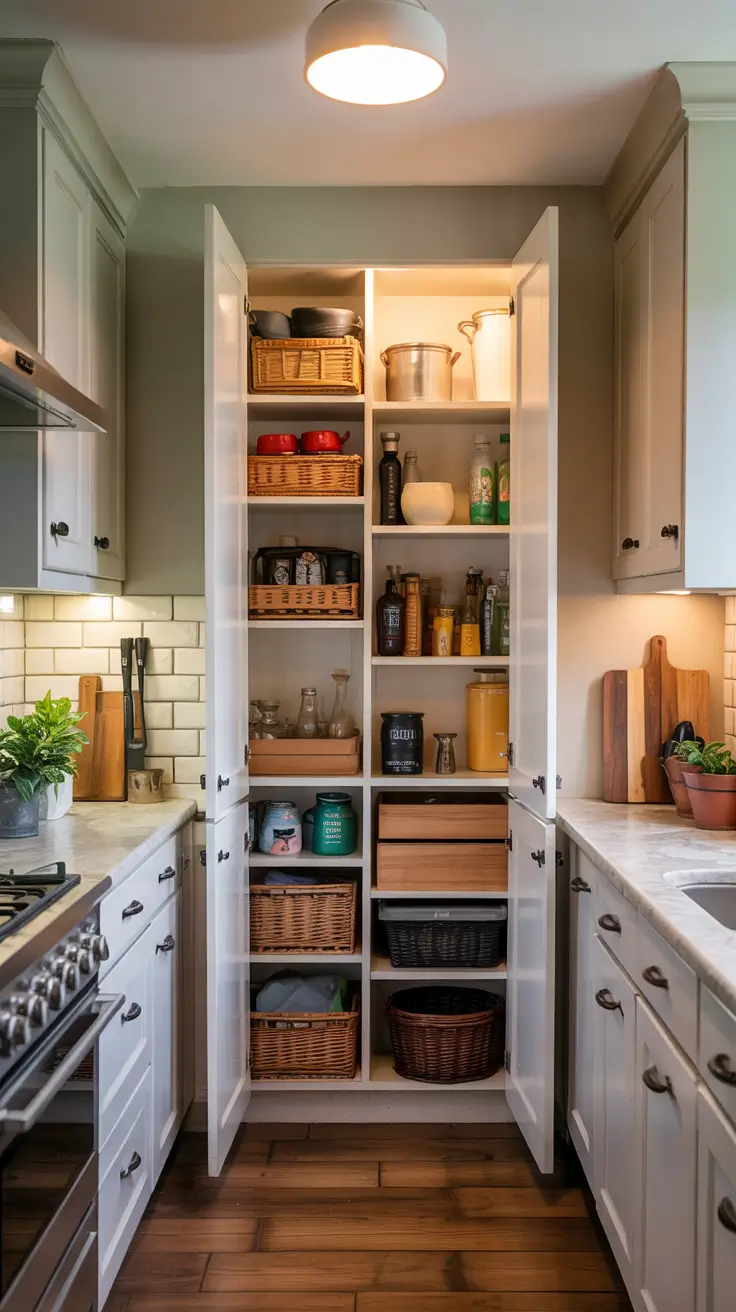
From my professional perspective, simplicity always wins. Design publications often warn against prioritizing aesthetics over function, and I’ve seen how that advice applies directly to hidden pantries.
What I usually suggest correcting is internal circulation. Even small pantries need enough space to move and reach items easily.
Conclusion
Hidden pantries are no longer a luxury—they’re a thoughtful response to how we live in our kitchens today. If any of these ideas sparked inspiration, share your thoughts or questions in the comments. I’d love to know which hidden pantry solution you’d choose for your own home and why.